

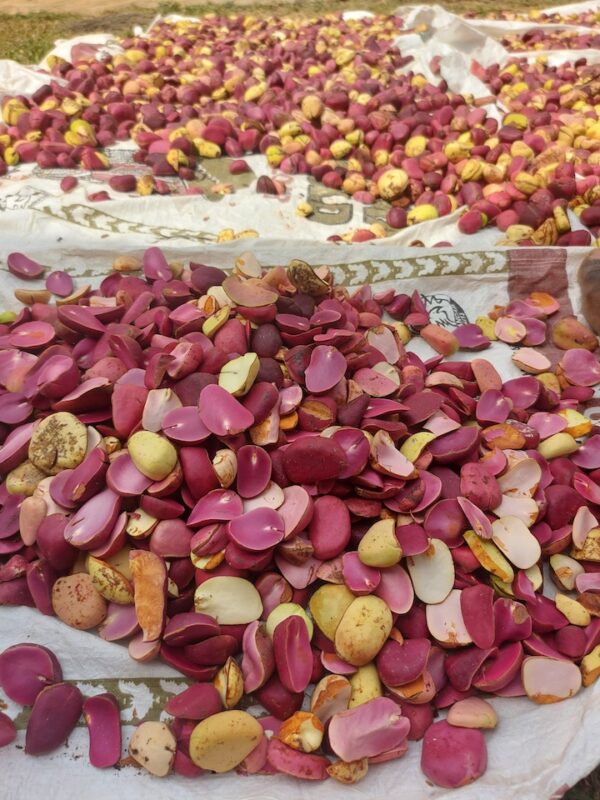
Dried Kola Nut is one of the most commercially relevant forms of kola traded across West Africa and into select international markets. While fresh kola nut remains important in local circulation and immediate consumption channels, dried kola nut tends to be the more practical form for longer storage, wider distribution, export handling, and ingredient-related trade. For buyers who need a more stable product that can move across borders with less urgency than fresh stock, dried kola nut offers a more workable commercial option.
In Nigeria, Dried Kola Nut is known in traditional agricultural markets, inter-state redistribution channels, border trade routes, and specialty export supply chains. It is not just a cultural product and it is not only a stimulant nut. It is also a trade commodity with value in ethnic retail, herbal raw material sourcing, regional redistribution, and selected processing applications. This makes it a product with layered demand, which is one reason it continues to attract attention from wholesalers, importers, diaspora-focused distributors, botanical traders, and export-oriented sourcing companies.
For commercial buyers, Dried Kola Nut often appears attractive because it solves one of the biggest limitations of fresh kola trade, which is perishability. Drying helps extend usability, improve handling for longer transit, and support export preparation. But that advantage only holds when drying is done properly. Poorly dried kola nut can still develop mould, take in moisture during storage, lose desirable quality, or arrive in a condition that weakens resale value. In other words, drying helps, but careless drying does not.
This is why Dried Kola Nut should never be sourced casually. It is easy for a seller to say a lot is dry, exportable, or premium. It is much harder to prove that the product was dried correctly, sorted well, packed properly, and stored in a condition that supports real commercial use. Buyers who focus only on cheap quotes often discover later that they have purchased a lot with excessive breakage, poor colour consistency, hidden moisture, pest exposure, or weak documentation. At that point, the low price has already stopped being an advantage.
From a Nigerian market perspective, Dried Kola Nut also benefits from familiarity. The commodity is well understood by market actors, traders, and many consumers across West Africa. That familiarity helps create dependable demand in both local and regional trade. For international buyers, especially those serving ethnic grocery, herbal trade, traditional goods channels, or specialty agricultural niches, the product also benefits from strong recognition among consumers who already know what kola nut is and how it is used.
One practical reason Dried Kola Nut remains commercially attractive is that it can sit in several market categories at once. It can move as a chewing product in some channels, as a traditional and ceremonial item in others, as an herbal raw material in another segment, and as a specialty ingredient or ethnobotanical product elsewhere. That cross-market utility makes it more resilient than some narrow-use agricultural products.
Still, the product must be approached with discipline. A serious importer needs clarity on botanical identity, dryness level, defect tolerance, form of presentation, packaging, and shipping terms. A serious supplier should be able to explain how the nuts were harvested, dried, sorted, stored, and packed. A serious transaction should include clear paperwork, clear commercial terms, and evidence that the goods being loaded match the goods that were offered.
In this guide, we will look at what Dried Kola Nut is, how it is processed, what it is used for, the health benefits and possible side effects associated with it, the major producing and importing countries, how to source it safely, where to find reliable exporters, how international price ranges typically work, what payment methods are common, how shipping is usually handled, what trade specifications buyers often request, and which documents should be expected in a professionally managed shipment.
For any buyer sourcing from Nigeria or the wider West African market, the commercial goal should not simply be to find dried kola nut. The goal should be to source the right dried kola nut, in the right form, from the right supplier, at a price that still supports margin after freight, documentation, handling, and destination costs have been accounted for.
Trade Overview of Dried Kola Nut
Dried Kola Nut refers to kola nuts from species such as Cola nitida and Cola acuminata that have been processed to reduce moisture for improved storage and handling. In Nigerian and West African trade, buyers may hear it called dried kola, dry kola nut, kola nut for export, or simply kola nut where the dried form is already understood from context. The product is traded in domestic produce markets, aggregation hubs, cross-border routes, herbal supply channels, and specialty export networks.
Commercially, Dried Kola Nut is a specialty agricultural product. It is not bought successfully by name alone. It is bought by specification. A buyer needs to know whether the nuts are whole or broken, how dry they are, whether they are mostly white, red, or mixed, whether the lot is intended for chewing markets or processing markets, and whether the supplier understands export packing and documentation. This matters because the same product name can cover very different commercial realities.
Compared with fresh kola nut, the dried form often travels better and fits export trade more naturally. That is one reason it is commercially useful. However, it also requires better moisture control. If the product is under-dried, it may spoil during storage or transit. If it is over-dried or handled too roughly, breakage and reduced marketability may become a problem. So even though drying adds stability, it also creates a need for tighter processing discipline.
In Nigeria, Dried Kola Nut still sits within a broader market culture where kola has social and traditional significance. That matters commercially because cultural recognition supports baseline demand. At the same time, international trade increasingly depends on practical issues such as shelf stability, packaging suitability, document readiness, and route planning. The best exporters are the ones who understand both the cultural side of the commodity and the operational side of moving it professionally.
| Commodity Name | Dried Kola Nut |
|---|---|
| Botanical Name | Cola nitida and Cola acuminata |
| Common Names | Dried Kola Nut, Dry Kola, Cola Nut, Kolanut |
| Nigerian Market Reference | Commonly traded across kola-producing belts, aggregation hubs, and redistribution markets in Nigeria for domestic, regional, and export supply |
| Product Forms | Dried whole nuts, semi-broken dried nuts, sorted export lots, mixed commercial dried grades |
| Main Commercial Uses | Chewing markets, ceremonial trade, herbal supply, ethnobotanical trade, specialty distribution, ingredient use |
| Trade Type | Domestic wholesale, regional West African trade, diaspora export, specialty raw material supply |
| Quality Drivers | Correct drying, low moisture, clean sorting, minimal breakage, mould-free condition, pest-free storage, suitable packaging |
| Typical Packaging | Woven sacks, lined sacks, cartons, export cartons, buyer-specified packaging |
| Buyer Risks | Hidden moisture, mixed grades, excess breakage, poor storage, mould, insect damage, weak documentation |
Request a Quote or Speak With Our Team About Dried Kola Nut
Ready to source Dried Kola Nut with confidence? Submit your RFQ for detailed specifications and formal quotations, or chat on WhatsApp for fast responses and quick clarification.
What Is Dried Kola Nut?
Dried Kola Nut is the dried commercial form of kola seeds obtained from kola-bearing trees native to tropical Africa, especially Cola nitida and Cola acuminata. These seeds are naturally associated with caffeine and related stimulatory compounds, which is one reason they have long been chewed and valued in traditional use across West Africa. When dried properly, the nuts become more suitable for storage, transport, and commercial redistribution.
In practical trade terms, Dried Kola Nut is not simply fresh kola that has been left out to harden. Good drying is a process decision. It is part of export preparation, shelf-life management, and product stabilization. The point is to reduce excess moisture to a level more suitable for trade without creating unnecessary damage, contamination, or avoidable quality loss. Buyers who understand this usually ask how the nuts were dried, not just whether they were dried.
The dried form is important because it helps reduce the urgency that comes with fresh-product movement. Fresh kola can work well in rapid local distribution, but longer trade routes often benefit from the relative stability of dried product. This makes Dried Kola Nut especially relevant for exporters, importers, herbal traders, and distributors handling product over longer timeframes or across international routes.
At the same time, Dried Kola Nut can vary significantly from one supplier to another. Some lots are better suited to chewing markets. Some are better suited to herbal and ingredient buyers. Some are sorted and visually attractive. Others are mixed commercial lots with broader tolerance for appearance. Because of this, the safest buying approach is to define the exact intended use first and then source the dried grade that matches that use.
In Nigeria and across neighbouring markets, Dried Kola Nut still carries the broader identity of kola as a culturally significant commodity. That helps preserve commercial relevance. For modern trade, however, what matters most is whether the lot is fit for its intended market. That question depends on drying quality, sorting discipline, and the ability of the supplier to meet clear trade specifications.
How Dried Kola Nut Is Made / Processed
The commercial quality of Dried Kola Nut depends on how the product is handled from orchard to warehouse. Good drying alone is not enough if the harvest, extraction, sorting, packing, or storage stages are weak. Buyers who want dependable supply should understand how the product is prepared and what signs of good practice look like.
1. Orchard cultivation and fruit development
Kola nuts come from mature kola trees that grow in tropical African environments. Commercial quality begins with healthy trees and properly matured fruit. While a buyer may not always inspect orchards directly, the source still matters. Product tied to established producing communities usually has a better chance of consistency than product assembled randomly from uncertain origins.
For suppliers, orchard-linked access can make it easier to manage harvest timing and lot quality. For buyers, it is often a useful sign that the exporter is sourcing with some structure rather than just reacting to whatever happens to be available in the open market.
2. Harvesting the mature pods
When the pods mature, they are harvested for extraction. Timing matters because immature pods can produce nuts that are less commercially attractive, while badly handled mature pods can lead to physical damage before drying even begins. Since appearance still affects value in many markets, rough harvesting can lower the quality of the final dried lot.
Experienced suppliers know that handling should be careful from the start. A nut that is bruised or damaged before drying may not improve later simply because moisture is reduced.
3. Opening the pods and removing the nuts
After harvest, the pods are opened and the nuts are removed. This stage should be done in a way that limits cuts, crushing, contamination, and unnecessary exposure to dirt. In commercial terms, this is the first major quality-control checkpoint because it influences how much usable whole product is left for sorting and drying.
For buyers, strong results at this stage usually show up later as better whole-nut count, lower breakage, and cleaner presentation.
4. Cleaning and initial sorting
Once removed, the nuts are cleaned to remove pod residue and visible debris. They are also often sorted initially to separate sound nuts from obviously damaged, rotten, or pest-affected ones. Some suppliers may also begin colour or size separation at this stage if they are preparing for a more defined commercial grade.
This stage is commercially important because drying bad product does not make it good product. Weak nuts, contaminated nuts, or poorly selected nuts should be removed before drying advances too far.
5. Controlled drying for storage and trade
Drying is the defining stage for Dried Kola Nut. The aim is to reduce moisture enough to improve storage and handling without introducing problems such as excessive brittleness, contamination, or uneven drying. Drying may be done with traditional methods or more controlled approaches depending on the supplier’s system, but what matters most is the outcome.
A good dried lot should not feel damp, should not smell musty, and should not show obvious signs of incomplete moisture reduction. If the lot is unevenly dried, one part of the shipment may hold up well while another part deteriorates. That is why buyers should ask not just whether the goods are dried, but whether drying was uniform and suitable for the planned shipping route.
6. Secondary sorting and grading
After drying, better suppliers perform another sorting stage. This is where broken nuts, insect-damaged pieces, mould-risk units, badly stained nuts, and other unsuitable pieces are removed. Size grading may also be done if the buyer wants a more uniform lot.
From a buyer’s standpoint, this is where the difference between ordinary commodity handling and export-minded preparation becomes obvious. A supplier that sells unreviewed dried stock is far riskier than one that can explain the grade structure clearly.
7. Packaging according to destination needs
Dried Kola Nut may be packed in woven sacks, lined sacks, cartons, or custom buyer packaging depending on the market. The choice of packaging should reflect the transit duration, moisture risk, handling conditions, and buyer preference. Because the product is dried, many traders assume any packaging will do. That is a mistake. Poor packaging can allow moisture re-entry, physical damage, and contamination.
For longer routes, especially sea freight, packing quality becomes a major part of trade quality. Strong product in weak packaging is still a weak shipment.
8. Storage under dry and clean conditions
After packing, Dried Kola Nut should be stored in a dry, clean, pest-controlled environment. This stage is often underestimated. A properly dried lot can still absorb ambient moisture if storage is poor. It can also suffer insect attack, odour contamination, or physical damage if stacked badly.
Buyers should ask how stock is stored, how long it has been held, and whether stock rotation is being practiced. A recent photograph of packed inventory can sometimes reveal more than a verbal assurance.
9. Final dispatch and shipment readiness
Before dispatch, the exporter should confirm quantity, packing integrity, and shipment documentation. For higher-value or first-time orders, buyers may also request a final inspection or loading evidence. This is where the supplier proves that the goods being shipped are the goods that were quoted.
In specialty produce trade, many disputes happen because final dispatch readiness was assumed rather than verified. Strong exporters treat it as a formal step, not an afterthought.
What Is Dried Kola Nut Used For?
Dried Kola Nut has several commercial uses, which is one reason it continues to circulate across domestic, regional, and international channels. The exact use depends on the buyer, the form of the nut, and the target market.
Direct chewing in suitable markets
Although fresh kola is often preferred in some chewing markets, dried kola still serves direct-use channels where consumers are familiar with its taste and stimulant character. In this segment, buyers usually care about whole-nut integrity, acceptable dryness, and the absence of mould or spoilage signs.
Ceremonial and traditional trade
Kola nut has longstanding ceremonial and hospitality significance in many West African communities. Dried Kola Nut may still serve these channels where shelf stability and broader distribution are useful. This cultural market helps sustain background demand across many trade locations.
Herbal raw material supply
Dried Kola Nut is commercially useful in herbal and ethnobotanical trade because the dried form is easier to store, move, and incorporate into a wider supply chain. Herbal buyers usually focus strongly on dryness, cleanliness, identity, and contamination control.
Ingredient and processing trade
Some buyers source Dried Kola Nut as an input for further processing, grinding, or specialty product use. In these channels, uniformity, low foreign matter, and dependable dryness become more important than only visual appearance.
Regional redistribution
In West Africa, a significant share of kola trade involves moving product from producing zones to wholesale markets and onward into neighbouring countries. Dried Kola Nut fits this pattern well because it can tolerate redistribution better than more fragile fresh stock when handled correctly.
Ethnic grocery and diaspora supply
Outside Africa, Dried Kola Nut may appear in diaspora retail channels, traditional goods stores, herbal shops, and specialty grocery networks. These channels often need smaller but better-presented lots, with clearer packaging and more dependable shipping timelines.
Health Benefits of Dried Kola Nut
Dried Kola Nut is valued in traditional and commercial use largely because of its stimulating compounds and familiar functional identity. Health-related claims should always be positioned responsibly, but several commonly recognized benefits help explain why the product retains commercial demand.
1. It is associated with alertness and wakefulness
Dried Kola Nut, like kola nut generally, is widely associated with stimulation because it naturally contains caffeine and related compounds. This is one of the clearest reasons the commodity continues to be chewed and traded across familiar markets.
2. It is often linked with reduced fatigue
Traditional users commonly see kola nut as useful when they want to stay active, remain mentally engaged, or reduce tiredness. This perception is part of the product’s long-standing trade identity and continues to influence demand.
3. It has a place in traditional digestive use
In some traditional settings, small pieces of kola nut are associated with digestive support, especially around meals. While this should not be overstated in modern product marketing, it remains part of the product’s recognized traditional profile.
4. It contains botanically relevant active compounds
Beyond its stimulant identity, Dried Kola Nut remains relevant to herbal and ethnobotanical buyers because it contains compounds that make it more than just a cultural item. This supports demand in specialty raw material channels.
5. It offers storage advantages over fresh forms
From a commercial perspective, one practical benefit is that drying makes the product easier to store and move when done correctly. That may not be a direct consumer health benefit, but it is a meaningful trade benefit because it supports more reliable supply to the final user.
6. It already has strong market recognition
One overlooked benefit is familiarity. Dried Kola Nut does not need the same level of introduction as an obscure botanical. In many target communities, consumers already know the product and understand what they expect from it.
Side Effects of Dried Kola Nut
Like other stimulant-containing botanicals, Dried Kola Nut is not without possible side effects or trade-related risks. A serious exporter or distributor should present the product honestly rather than as an all-benefit commodity.
1. Excess intake may cause overstimulation
Because kola nut contains caffeine, excessive use may contribute to jitteriness, restlessness, or other overstimulated feelings in some users. This is especially relevant for individuals who are already sensitive to caffeine.
2. It may affect sleep
Dried Kola Nut can interfere with sleep when used late or in high quantity. This is part of its stimulant profile and should be kept in mind in any consumer-facing positioning.
3. Some users may experience digestive discomfort
Although kola is traditionally linked with digestion in some settings, not every user responds the same way. Some individuals may experience irritation or discomfort, especially depending on quantity and personal tolerance.
4. It may not suit consumers avoiding stimulants
People who limit caffeine or avoid stimulants may not tolerate Dried Kola Nut well. That makes responsible positioning important in wellness or health-conscious retail channels.
5. Poorly dried product can create separate quality risks
Not every problem comes from the natural character of the nut itself. Poor drying, bad storage, or reabsorbed moisture can create mould risk, spoilage, and quality decline. This is one of the biggest commercial dangers in dried agricultural products generally.
6. Weak documents can become a trade side effect
For export buyers, one of the practical side effects of careless sourcing is customs delay, clearance difficulty, or shipment rejection caused by missing or weak paperwork. In specialty produce trade, documentation failures are often just as costly as product-quality failures.
Top Producing & Exporting Countries of Dried Kola Nut
Dried Kola Nut supply follows the broader kola-producing geography of tropical Africa, especially West Africa. Export visibility can differ from production scale because some countries consume large volumes locally while others appear more strongly in formal export records.
1. Nigeria
Nigeria is one of the most important commercial origins for kola nut and remains central to trade discussions around dried forms as well. It is a major reference point because of production scale, domestic market familiarity, regional trade links, and the availability of experienced produce merchants.
2. Côte d’Ivoire
Côte d’Ivoire is a major supplier in the wider kola trade and is often visible among leading exporters in formal trade data. For buyers seeking West African origin options, it remains one of the strongest names in the export picture.
3. Cameroon
Cameroon plays a meaningful role in kola production and movement, particularly in regional and specialty trade channels. It can be relevant for buyers working across both West and Central African routes.
4. Ghana
Ghana contributes to the broader kola market and remains part of the regional supply structure. While not always the top country cited in every discussion, it is still commercially relevant depending on the buyer’s route and market preference.
5. Other smaller producing origins
Other African producing countries also contribute to the wider kola ecosystem, especially in regional trade. These may not dominate formal global trade summaries, but they can still matter in practical sourcing networks.
Top Importing Countries of Dried Kola Nut
Dried Kola Nut moves into markets shaped by diaspora demand, traditional use, regional redistribution, and specialty botanical trade. Import destinations can vary, but some countries consistently matter because they act as final consumer markets or distribution hubs.
1. United States
The United States remains important because of diaspora demand, ethnobotanical interest, and specialty retail channels. Buyers targeting this market usually need stronger packaging, cleaner presentation, and reliable documentation.
2. Italy
Italy appears repeatedly as a relevant importer in the wider kola trade picture, reflecting demand linked to ethnic commerce, specialty distribution, and niche import channels.
3. Germany
Germany is commercially relevant in the broader import landscape, especially where specialty botanical or immigrant-community demand supports movement.
4. France and Spain
France and Spain also matter in European trade discussions, particularly where there are diaspora communities and specialty retail routes that already understand the commodity.
5. Regional African markets
Neighbouring African countries remain very important because kola already has a cultural and commercial place in many regional economies. For some exporters, these nearby markets are more practical and more dependable than long-haul overseas destinations.
How To Safely Source for Your Dried Kola Nut Produce
Safe sourcing starts with defining exactly what you want to buy. Dried Kola Nut should not be purchased on assumptions. A buyer should specify whether whole nuts are required, what level of breakage is acceptable, whether colour matters, what dryness level is expected, what packaging is preferred, and what end use the product is meant for. Without that, quotations from different suppliers are often not comparable because they are not describing the same product.
Next, verify the supplier’s source and process. Ask where the nuts come from, how they are dried, whether drying is done in a controlled and consistent manner, how the product is sorted after drying, and how the goods are stored before dispatch. A reliable answer here is often more important than a polished quotation document.
Sampling is essential. A Dried Kola Nut sample should be checked for dryness, firmness, smell, colour consistency, visible breakage, insect damage, mould signs, and foreign matter. The buyer should decide whether the product fits chewing use, herbal raw material use, or general trade use. These are different markets and they do not always accept the same grade.
Ask for clarity on moisture and storage. Some lots appear dry on the outside but were stored in humid conditions that allow the product to take in moisture again. A supplier should be able to explain how stock is protected, how long it has been stored, and how packaging supports product stability. Recent stock photographs can help support these explanations.
Confirm the packaging method before you approve the order. If the product is moving by sea, the packing should be designed for that route. If it is going by air for a smaller specialty order, the packaging may be different. If the buyer wants inner liners, outer cartons, buyer labels, or palletization, these should be agreed before goods are packed, not after.
Documentation readiness should be checked early. At minimum, serious buyers often expect a commercial invoice, packing list, certificate of origin, and phytosanitary support where applicable. Depending on route and destination, an inspection document or fumigation evidence may also be needed. A supplier who only starts thinking about paperwork at the port can create avoidable delay.
Clarify the trade basis. Is the seller quoting EXW, FOB, CFR, or CIF? Does the price include inland transport to port? Does it include export handling? Is freight included? Is insurance included? Many buying mistakes happen because the buyer compares a warehouse price from one supplier with a port-loaded price from another and assumes they are the same thing.
For first-time deals, payment should be disciplined. Many prudent buyers prefer staged payment structures that tie release of funds to sample approval, pack readiness, inspection, or shipment milestones. This reduces exposure in case the supplier underperforms.
Independent checks are often worthwhile for larger orders. A pre-shipment inspection or loading verification can protect the buyer from major mismatch between approved sample and actual cargo. In dried produce trade, this is especially useful because moisture and defect issues are not always obvious in casual photographs.
Finally, scale gradually. A supplier who performs on one shipment may deserve more business, but trust should be built through repeated performance. Long-term reliability matters more than one attractive deal. In Dried Kola Nut trade, consistency is where real supplier value shows.
Where To Find Reliable Exporters for Dried Kola Nut
Reliable exporters are usually found through structured agricultural export networks, trade referrals, produce sourcing partners, and exporters who already handle specialty Nigerian or West African commodities professionally. Public listings can help identify candidates, but they should not be mistaken for proof of reliability.
One of the strongest sourcing paths is to work with exporters who already understand dried agricultural products, plant-health paperwork, quality sorting, and export packing. A supplier who regularly handles export processes is usually more valuable than one who only knows how to buy goods locally and pass them on.
Trade referrals remain one of the safest channels. Buyers already active in ethnic food, herbal raw material, or African produce supply often know which exporters are dependable and which ones create problems. A referred exporter with actual shipment history is usually safer than an unknown seller offering unusually low prices.
Export facilitators and sourcing firms can also be helpful, especially for first-time buyers. A good facilitator does more than introduce a contact. They help verify product readiness, compare supplier claims, and reduce misunderstandings before money is committed.
Whatever route is used, buyers should still verify key points independently. Ask for business registration details, sample readiness, warehouse visuals, proof of stock, clear quotations, documentation capability, and where possible references from past trade relationships. In Dried Kola Nut trade, reliability is proven through execution, not through promotional language.
International Price of Dried Kola Nut Per Metric Ton
The international price of Dried Kola Nut per metric ton depends on origin, dryness level, grade, breakage tolerance, packaging style, route, and delivery basis. Because the wider kola category includes both fresh and dried forms, buyers should be careful not to assume that every market reference applies equally to a properly dried export lot.
In practical trade terms, Dried Kola Nut usually carries pricing influenced by the broader kola market while also reflecting the additional value of drying, storage suitability, and export handling. Lower-grade or loosely packed lots may quote closer to raw market levels, while better-sorted, drier, cleaner, export-ready lots can move higher because they reduce risk for the buyer.
For 2025 to 2026, a realistic working range for Dried Kola Nut in export-oriented trade is often discussed around approximately US$1,200 to US$2,600 per metric ton for standard commercial to better-sorted lots, with smaller specialty consignments, higher packaging standards, or more selective grades sometimes pricing above that range depending on destination and freight structure. Very low offers should be treated carefully because they may reflect mixed grades, poor drying, hidden moisture, or weak shipment readiness.
Buyers should confirm whether the quote refers to dried whole nuts only, mixed dried grades, or partially broken lots. They should also confirm whether the price is EXW, FOB, CFR, or CIF. A low warehouse quote may look attractive until freight, inspection, handling, and documentation are added.
Price should never be judged alone. In dried produce trade, slightly higher pricing can still produce a better outcome if the goods are cleaner, drier, better packed, and easier to clear. The cheapest quote on paper is not always the cheapest shipment in practice.
Request a Quote or Speak With Our Team About Dried Kola Nut
Ready to source Dried Kola Nut with confidence? Submit your RFQ for detailed specifications and formal quotations, or chat on WhatsApp for fast responses and quick clarification.
How To Pay For Your Dried Kola Nut Produce
Payment terms should reflect the relationship history, the order size, and the risk level involved. In specialty produce trade, good payment structure protects both buyer and seller.
For first orders, staged payment is usually better
Many buyers prefer a deposit-and-balance structure for initial transactions. The balance may be linked to packing completion, inspection, or dispatch readiness. This reduces the risk of paying fully before performance is visible.
Established suppliers can sometimes support more flexible terms
Once a supplier has demonstrated consistency across multiple shipments, negotiations around payment timing may become easier. Even then, all terms should still be written clearly.
Bank transfer remains common in export trade
Direct bank transfer is a common method in produce exports. Buyers should verify that beneficiary details match the contracting business and should not rely on informal payment changes communicated casually.
All payments should follow proper paperwork
Every payment should be tied to a clear proforma invoice showing product description, quantity, price basis, packaging format, delivery term, and seller identity. This documentation reduces room for dispute.
Larger orders may need stronger payment control
As order size increases, buyers often prefer payment structures that rely more heavily on document readiness, inspection outcome, or shipment milestones. Higher-value deals deserve tighter control.
Shipping & Delivery Terms
Dried Kola Nut can move by road in regional African trade, by air for urgent or niche consignments, and by sea for larger volumes. The best mode depends on volume, urgency, margin, and the condition of the product.
FOB is useful for experienced importers
Under FOB terms, the supplier handles local preparation and export delivery up to the agreed port, while the buyer takes over freight and onward logistics. This gives experienced importers more control over shipping cost and carrier choice.
CIF can simplify planning for some buyers
Some importers prefer CIF because it gives them a more bundled cost structure that includes freight and insurance. This can be helpful for buyers who want simpler landed planning, though the assumptions behind the CIF price should still be reviewed carefully.
Airfreight suits small urgent consignments
For niche or time-sensitive shipments, airfreight may be practical. The downside is cost, so the buyer should be sure the destination market can support the extra expense.
Sea freight is better for larger trade volumes
For tonnage orders, sea freight is usually more economical. However, the shipment must be packed well enough to maintain dryness and protect against transit-related quality loss.
Successful delivery starts before cargo reaches the port
Many shipping failures begin in the warehouse, not on the vessel. Weak packing, poor stock control, and missing documents often create more trouble than the actual freight movement. Good delivery terms only work when pre-loading discipline is strong.
Our Typical Trade Specifications For Dried Kola Nut
The exact specification depends on the buyer’s target market, but the framework below reflects the kind of commercial details many serious buyers ask for before they proceed.
| Specification Item | Typical Trade Expectation |
|---|---|
| Product Name | Dried Kola Nut |
| Botanical Identity | Cola nitida / Cola acuminata as agreed |
| Product Form | Dried whole nuts or mixed dried grade as specified |
| Colour Type | White, red, or mixed as agreed |
| Grade | Standard export grade or premium sorted grade |
| Size | Uniform commercial size or mixed size as agreed |
| Moisture Condition | Dry and suitable for storage and transit under agreed trade conditions |
| Foreign Matter | Minimal and within agreed tolerance |
| Defect Tolerance | Low level of broken, mouldy, insect-damaged, or spoiled nuts |
| Odour | Characteristic, clean, free from mustiness |
| Pest Status | Free from live infestation |
| Packaging | Woven sacks, lined sacks, cartons, or buyer-specified export packing |
| Labelling | Product name, origin, lot details, net weight, and buyer marks where required |
| Inspection | Supplier QC or third-party pre-shipment inspection where agreed |
Expected Shipping Documents
Dried Kola Nut exports should move with a complete documentation package. The exact requirement depends on destination and trade basis, but the following documents are commonly expected in a professionally handled shipment.
Commercial invoice
This confirms the transaction details, including seller, buyer, product description, quantity, unit price, total value, and agreed delivery basis.
Packing list
The packing list explains how the goods are packed, including package count, weights, and packaging format. It supports logistics handling and customs review.
Certificate of origin
This identifies the country of origin and may be required for customs processing, commercial verification, or trade preference purposes.
Phytosanitary certificate
Because Dried Kola Nut is an agricultural product, phytosanitary documentation may be required depending on the destination market and shipment structure.
Fumigation certificate where applicable
Some buyers or destinations request fumigation-related documentation depending on the cargo and packaging type. This should be clarified early in the transaction.
Bill of lading or air waybill
This is the transport document issued by the carrier and is essential for tracking, release, and freight administration.
Inspection or quality certificate where agreed
For larger or first-time transactions, a buyer may request an inspection report or quality certificate to confirm that the loaded shipment matches the agreed standard.
Request a Quote or Speak With Our Team About Dried Kola Nut
Ready to source Dried Kola Nut with confidence? Submit your RFQ for detailed specifications and formal quotations, or chat on WhatsApp for fast responses and quick clarification.