

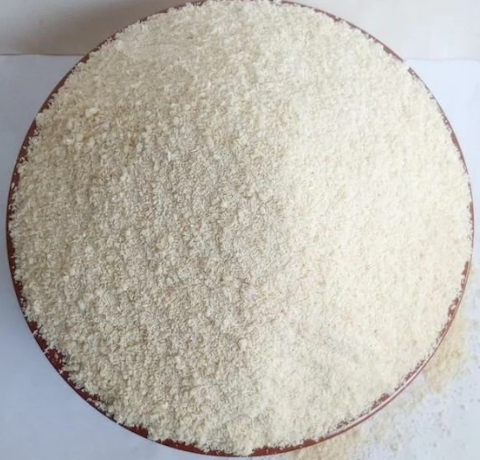
Ijebu Garri is one of the most commercially recognised cassava food products in Nigeria and across West African food trade. It is not just another type of garri. In the market, it is known for its distinctive sour profile, fine grain, clean finish, and strong consumer loyalty, especially among buyers who already understand the difference between ordinary garri and a well-processed Ijebu-style product. For wholesalers, distributors, exporters, ethnic grocery suppliers, foodservice buyers, and private-label food businesses, Ijebu Garri remains a serious staple commodity because it combines mass-market familiarity with premium preference in the right consumer segments.
In practical trade terms, Ijebu Garri sits in an interesting position. It is a staple food, but it is also a branded style within the broader garri market. This matters because buyers are not only purchasing cassava granules. They are purchasing a recognised texture profile, fermentation character, dryness level, finish quality, and eating experience. Where yellow garri may be preferred in some regions for its palm-oil colour and taste, Ijebu Garri is often preferred by buyers who want a whiter, drier, tangier, more sharply fermented garri that works especially well for drinking with cold water, sugar, groundnut, milk, or other quick-consumption pairings. That preference gives it a strong identity in the market.
In Nigeria, Ijebu Garri is widely referenced in wholesale markets, retail stalls, supermarkets, food stores, and export packing conversations as Ijebu garri, white Ijebu garri, premium garri, sour garri, or drinking garri depending on the exact trade context. Though the name points to Ijebu in Ogun State, the style itself now influences production and marketing far beyond one local geography. Many suppliers describe their product as Ijebu Garri because they are aiming to communicate a certain processing standard and taste profile, not merely a place of origin. That makes product verification especially important for serious buyers.
The product comes from cassava, botanically known as Manihot esculenta. Cassava is processed through peeling, washing, grating, fermentation, dewatering, sieving, and roasting to produce garri. However, not every garri becomes Ijebu Garri in the commercial sense. The distinctive taste, dryness, and market expectation are shaped by the length and style of fermentation, the quality of the cassava roots used, the handling after grating, the pressure applied during dewatering, the fineness of sieving, the care taken during roasting, and the final moisture content. A buyer who ignores these details may source “garri” that is technically acceptable but commercially wrong for the Ijebu Garri market.
From a business perspective, Ijebu Garri continues to attract attention because it is both a local staple and a diaspora-friendly packaged food product. It has stable demand within Nigeria, active demand in neighbouring West African markets, and consistent relevance in African grocery channels abroad. It can be sold loose in open markets, packed in sacks for wholesale supply, or packaged in branded retail units for supermarket and export shelves. This gives traders several ways to position the product depending on their capital, distribution reach, and target customer class.
Yet safe sourcing remains essential. Garri is a processed food, and the quality problems buyers face are often not immediately obvious from a quick visual glance. Excess moisture, smoky roasting, contamination, poor fermentation balance, excess fibre, sandy particles, insect exposure, weak packaging, and misrepresentation of the true style are all common risks. A lot may look white and dry at first but still disappoint badly in taste, storage, or consumer acceptance. This is why experienced buyers usually combine sample testing, supplier checks, packaging review, and clear written specifications before committing funds.
For importers, wholesalers, distributors, food processors, retailers, and institutional food buyers, the smartest way to approach Ijebu Garri is to understand both the product and the trade mechanics around it. The product is familiar, but the margin is protected by how well it is sourced, graded, packed, paid for, and shipped. This guide explains the commercial trade overview of Ijebu Garri, what it is, how it is made, what it is used for, the health value buyers market around it, the realistic side effects and quality concerns, major producing and consuming regions, safe sourcing methods, how to find reliable exporters, price-per-ton expectations, payment structures, shipping terms, trade specifications, and the documents buyers should expect before cargo moves.
Trade Overview of Ijebu Garri
| Product Name | Ijebu Garri |
|---|---|
| Botanical Name | Manihot esculenta |
| Common Names | Ijebu Garri, White Garri, Sour Garri, Premium Garri, Drinking Garri |
| Nigerian / Common Market Reference | Ijebu Garri, White Ijebu Garri, Fine White Garri, Premium Sour Garri |
| Typical Form | Dry roasted cassava granules, usually white to off-white, fine to medium grain |
| Main Commercial Uses | Drinking garri, eba preparation, retail food packs, diaspora grocery supply, foodservice, wholesale staple distribution |
| Texture | Crisp, dry, free-flowing granules, typically finer than some other garri styles |
| Taste Profile | Distinctively sour to moderately sour, depending on fermentation method and buyer preference |
| Primary Buyer Segments | Wholesalers, exporters, supermarkets, ethnic grocery distributors, repackers, caterers, institutional food buyers |
| Quality Drivers | Proper fermentation, low moisture, clean roasting, low fibre, no sand, no smoke taint, bright appearance, strong packaging |
| Packaging | 25kg to 50kg sacks, PP-lined bags, woven bags, food-grade retail pouches, private-label packs |
Request a Quote or Speak With Our Team About Ijebu Garri
Ready to source Ijebu Garri with confidence? Submit your RFQ for detailed specifications and formal quotations, or chat on WhatsApp for fast responses and quick clarification.
What Is Ijebu Garri?
Ijebu Garri is a well-known style of garri made from cassava and recognised for its dry, fine, sour, and refreshing eating profile. In the broadest sense, garri is a roasted granular food made from fermented cassava mash. But within that broad category, Ijebu Garri holds a specific market identity. Buyers usually expect it to be whiter, more fermented in taste, less oily, and more suitable for direct soaking or drinking than some other types of garri in the Nigerian food market.
What makes Ijebu Garri commercially important is not only that it is popular, but that it is preference-driven. Many consumers do not see it as interchangeable with ordinary garri. They actively ask for Ijebu Garri because of the flavour memory and mouthfeel they associate with it. This creates repeat demand and gives the product a strong resale advantage in the hands of traders who source well.
In most trade discussions, Ijebu Garri is grouped under white garri because it is usually produced without palm oil, unlike yellow garri. However, white garri and Ijebu Garri are not always the same in the consumer’s mind. A bag can be white and still not satisfy the market expectation for real Ijebu Garri if the fermentation is weak, the grain is too coarse, the taste is flat, or the product feels damp and stale. This distinction is important because careless sourcing often leads to mis-selling.
From a food-product standpoint, Ijebu Garri is shelf-stable when properly processed and packed. That makes it commercially easier to move than many fresh staple foods. It can travel in regional trade, remain in warehouse storage for a reasonable period under the right conditions, and be repacked into smaller branded units. These features explain why it continues to attract distributors and exporters.
Another reason the product has strong trade value is that it fits both low-cost staple consumption and premium convenience branding. At the low end, it is a familiar daily food sold in open markets and neighbourhood retail. At the premium end, it can be positioned in clean branded packs for supermarkets, online grocery stores, ethnic retail shelves, and diaspora consumers willing to pay more for trusted quality. Few staple foods move so easily across these different price layers without losing demand.
In simple terms, Ijebu Garri is not merely cassava granules. It is a market-recognised garri standard with a distinct buying logic. A serious buyer should therefore source it as a defined style with agreed characteristics, not as a generic cassava product.
How Ijebu Garri Is Made / Processed
The quality of Ijebu Garri is created through processing. Since buyers often pay for the style and taste profile, understanding the process is essential. The main stages appear simple, but the difference between ordinary garri and premium Ijebu Garri is often found in the discipline applied at each stage.
1. Selection of mature cassava roots
The process starts with mature cassava tubers harvested at the right stage. Cassava that is too old, too woody, badly damaged, or beginning to deteriorate can affect the taste and final appearance of the garri. Good processors usually prefer sound roots with strong starch yield and without obvious rot or serious pest damage. Since garri is a processed staple, some buyers assume raw-root quality does not matter much. In practice, it matters a lot.
2. Peeling and washing
After harvest, the cassava roots are peeled to remove the outer skin and washed to reduce soil and surface contamination. This stage influences the brightness and cleanliness of the final product. Poor peeling may leave dark specks or fibrous peel particles in the garri. Poor washing can introduce grit and dirt that later damage eating quality and market confidence.
3. Grating the cassava
The clean cassava is then grated into mash. The grating stage affects how evenly the mash ferments and how well moisture is later removed. A coarse or inconsistent mash can create uneven fermentation and a less refined final product. Better processors understand that the consistency of the mash plays a role in the characteristic texture expected from Ijebu Garri.
4. Fermentation of the cassava mash
This is one of the most important stages. The grated cassava is packed into bags or containers and allowed to ferment under controlled pressure and time conditions. For Ijebu Garri, the fermentation profile is central to the commercial identity of the product. Buyers often expect a distinctly sour note. If the fermentation is too short, the garri may taste flat and ordinary. If it is excessive or poorly handled, the product can become unpleasant, unstable, or difficult to sell outside narrow consumer groups.
5. Dewatering and pressing
During and after fermentation, the cassava mash is pressed to remove excess liquid. Proper dewatering improves shelf stability, roasting behaviour, and crispness. If the mash remains too wet, the product may roast poorly and retain too much moisture. If the pressing is weak, the final garri may clump, store badly, or feel heavy rather than dry and refreshing.
6. Breaking and sieving the mash
After pressing, the fermented cake is broken up and sieved. This stage influences grain size and uniformity. Since Ijebu Garri is often preferred for a finer and cleaner texture, careful sieving matters. Excess fibre, lumps, and coarse particles reduce the premium feel of the product and may push it down into a more generic garri category in the buyer’s eyes.
7. Roasting or frying the granules
The sieved mash is then roasted in a wide pan, traditionally over fire. Roasting must be done with care because it defines dryness, colour, crispness, and shelf life. Skilled roasting produces light, clean, free-flowing granules with a pleasing dry finish. Poor roasting can leave the garri smoky, partially damp, too brown, too hard, or unevenly cooked. This is one of the quickest ways a supposedly premium lot loses value.
8. Cooling and post-roast handling
Once roasted, the garri should be cooled properly before packaging. Hot product packed too early can trap moisture and reduce storage life. This stage is often neglected by weak processors. For bulk and export trade, post-roast handling is just as important as roasting itself because it protects the dryness buyers are paying for.
9. Final sorting and quality checks
Before packing, better suppliers inspect the garri for colour, odour, dryness, grain consistency, sand contamination, fibre content, and insect presence. At this point, a serious processor can separate stronger product from weaker product rather than mixing all output into one commercial lot. Buyers should look for suppliers who treat this stage as real quality control, not just a quick bagging step.
10. Packaging for wholesale or retail trade
The final product is packed according to the market channel. Wholesale trade may use large sacks, while export and retail programs may require stronger food-grade inner liners, sealed pouches, or private-label bags. Packaging should protect the product from moisture, odour, and insect attack. Since garri is hygroscopic and easily affected by environmental exposure, weak packaging can destroy product quality long after processing was completed correctly.
What Is Ijebu Garri Used For?
Ijebu Garri has broad commercial use because it serves both direct consumption and repackaged retail markets. Its versatility is one of the reasons buyers continue to trade it actively.
For drinking or soaking with water
This is one of the most recognised uses of Ijebu Garri. Many consumers prefer it for soaking in cold water with sugar, milk, groundnut, coconut, or other accompaniments. The sour note and crispness make it especially attractive in this format. For buyers, this matters because the product is not only bought as an ingredient. It is bought as an immediate eating experience.
For making eba
Though some consumers may prefer other garri styles for eba depending on regional taste, Ijebu Garri is still widely used to make eba. In this application, buyers often pay attention to swelling quality, smoothness, and the balance between sourness and overall taste. A lot that works excellently for drinking may not always be the top choice for every eba market, so end-use clarification matters.
For wholesale staple distribution
Large market traders buy Ijebu Garri for resale in open markets, neighbourhood shops, and regional distribution channels. Here, the product’s familiarity and stable demand are major strengths. Buyers in this channel usually care about turnover, consumer recognition, bag weight integrity, and consistency from load to load.
For supermarket and retail packs
Retailers and food brands buy Ijebu Garri to repackage into smaller units for supermarkets, convenience stores, and online food channels. In this segment, visual cleanliness, dryness, brand-ready presentation, and shelf confidence matter more. The product moves from being a bulk staple to being a consumer-packaged food item.
For diaspora grocery supply
Ijebu Garri is highly relevant in African grocery channels outside Nigeria because diaspora consumers often want the specific taste and texture they know from home. In these markets, authenticity matters. Buyers are not just sourcing garri. They are sourcing a taste standard that consumers will recognise immediately.
For foodservice and institutional meals
Restaurants, caterers, hostels, institutions, and event kitchens may buy Ijebu Garri because it is easy to store, fast to prepare, and familiar to the target consumers. In this case, the buyer usually values both price and dependable performance under repeated cooking or direct-serving conditions.
For private-label African food brands
Private-label operators often choose Ijebu Garri because it is a staple with strong brand loyalty. A well-packed, clean, properly labelled Ijebu Garri product can sit comfortably in a branded portfolio of Nigerian and West African foods. This creates room for margin beyond bulk commodity resale.
Health Benefits of Ijebu Garri
Like many staple foods, Ijebu Garri is valued first for practical food use, but it also carries nutritional and lifestyle advantages that help buyers position it in the market. The health conversation should remain realistic and not overstated, but there are still solid reasons the product remains attractive to consumers.
1. It is an accessible source of dietary energy
Ijebu Garri is widely consumed because it provides quick and dependable energy from cassava carbohydrates. In many markets, consumers value foods that are filling, affordable, and easy to prepare. This simple energy value is one of the product’s core commercial strengths.
2. It supports convenience in meal planning
Consumers can prepare or consume Ijebu Garri with very little effort compared with many other staples. This convenience helps explain its continuing popularity in student, worker, travel, and low-time households. Convenience itself is not a nutrient, but it supports regular food access and makes the product commercially durable.
3. It can contribute to satiety
As a staple carbohydrate food, Ijebu Garri helps consumers feel full. This satiety value matters in real market behaviour because buyers often choose staple foods that are not only affordable but also satisfying. Products that feel filling tend to retain repeat demand.
4. Fermentation contributes to its distinct digestibility profile
The fermentation process changes the cassava mash before roasting and helps create the familiar taste of Ijebu Garri. In the market, many consumers perceive fermented staple foods as more enjoyable and easier to fit into regular meals than bland unfermented alternatives.
5. It stores well when properly processed and packed
One advantage of Ijebu Garri from a household and food-security perspective is that it keeps relatively well under proper storage conditions. This makes it a practical staple for homes, traders, and institutions. Products with reasonable shelf life often provide both commercial and household value.
6. It pairs easily with other foods
Ijebu Garri is rarely consumed in isolation in premium use cases. It is often taken with milk, sugar, nuts, coconut, beans, soups, or protein-based accompaniments. This makes it easy to include in varied meal patterns, which supports its role in broader food systems.
7. It is a culturally trusted staple
Foods with strong cultural familiarity often perform better over time than novelty products. Ijebu Garri benefits from this trust. Consumers know how to use it, how it should taste, and what quality feels like. That familiarity supports stable demand and reduces the education burden on sellers.
Side Effects of Ijebu Garri
Although Ijebu Garri is widely consumed, buyers should understand the realistic concerns linked to quality, processing, and consumption. This is important for responsible sourcing and for protecting the value of the product in the market.
1. Excess acidity may not suit every consumer
One of the defining features of Ijebu Garri is its sourness, but that same characteristic can be a drawback for some consumers if it is too sharp. A lot that is over-fermented may be rejected by buyers seeking a more balanced taste. This is not necessarily a safety issue, but it is a real quality and consumer-acceptance issue.
2. Poor processing can leave sand or fibre in the product
If the cassava is not washed properly or the mash is poorly sieved, the final garri may contain gritty particles, peel fragments, or excess fibre. This immediately damages market trust. Buyers should therefore never treat cleanliness as a secondary issue in garri trade.
3. Moisture exposure can reduce shelf life
Ijebu Garri must remain dry. If it absorbs moisture during cooling, packing, transport, or storage, it can become stale, clumpy, and more vulnerable to spoilage or insect problems. A product that started well can decline badly if the packaging is weak or the warehouse is damp.
4. Smoke taint can spoil the eating experience
Traditional roasting methods are common, but careless fire control can give the garri an excessive smoky odour or taste. In some local markets this may be tolerated. In premium retail and export trade, it is usually a defect. Buyers should test smell as seriously as they test appearance.
5. Insect infestation is a real storage risk
Like many dry staple foods, garri can attract insects if stored carelessly. Weak bagging, dirty warehouses, or long exposure in open-market conditions increase this risk. Infested product is difficult to defend commercially and can cause losses across an entire stock line.
6. Misrepresentation of style can create disputes
Some sellers label almost any sour white garri as Ijebu Garri even when it does not truly match the market expectation. This leads to complaints, low repeat orders, and distrust. Buyers should specify the style and not rely only on the name written on the bag.
7. Poorly detoxified cassava products can pose quality concerns
Garri processing depends on proper fermentation and roasting to make cassava safe and commercially suitable. Weak processing standards are not acceptable. Buyers should work only with suppliers who understand cassava food processing properly and do not shortcut core production stages for speed or cost savings.
Top Producing & Exporting Countries of Ijebu Garri
Ijebu Garri is most closely associated with Nigeria, but cassava and garri-related trade across West Africa also shape broader regional supply. For serious buyers, the main question is not simply where cassava grows, but where the processing tradition and commercial structure support the style they need.
1. Nigeria
Nigeria is the main commercial reference point for Ijebu Garri. The product’s identity, consumer recognition, and strongest structured demand are linked to Nigerian processing and trade systems. Exporters serving diaspora markets usually rely on Nigerian supply bases because the authenticity signal matters strongly in this product class.
2. Benin
Benin participates in cassava and cassava-food trade within West Africa and may be relevant in some regional supply channels. However, for buyers seeking specifically recognised Ijebu Garri style, the supplier’s processing standard matters more than country name alone.
3. Ghana
Ghana has its own cassava-processing traditions and remains important in regional cassava food markets. It can be commercially relevant for certain white garri and related product discussions, especially in West African trade corridors.
4. Togo
Togo contributes to regional cassava-food movement and may be part of some cross-border staple supply chains. Buyers working within nearby West African markets may encounter such supply, though product identity and consumer preference should still be checked carefully.
5. Côte d’Ivoire
Côte d’Ivoire also participates in cassava production and processed-food trade. While not all such products align with Nigerian-style Ijebu Garri expectations, the country remains relevant in the wider regional cassava-food conversation.
6. Regional processors serving diaspora channels
Outside the farm-level production question, some of the most commercially important “exporters” are actually processors and packers that understand how to convert cassava into branded, clean, export-ready garri. In this segment, location matters less than proven quality performance and document readiness.
7. Nigerian packers and repackers with export experience
For premium trade, a Nigerian supplier with consistent processing and packing systems may be more valuable than a raw cassava-rich origin without structured export handling. This is especially true where the buyer needs labelling, retail packs, container loading discipline, and diaspora market familiarity.
Top Importing Countries of Ijebu Garri
Import demand for Ijebu Garri is shaped mainly by diaspora populations, ethnic grocery demand, and the rise of packaged African food distribution. The product is less likely to be treated as a mainstream universal staple abroad and more likely to succeed within culturally informed retail channels.
1. United Kingdom
The United Kingdom is one of the strongest markets for Nigerian and West African staple foods. African grocery stores, supermarkets with ethnic food shelves, and diaspora distributors create consistent relevance for products like Ijebu Garri.
2. United States
The US market is commercially important because of its large and diverse diaspora communities, growing African grocery retail, and e-commerce channels that distribute packaged African foods. Buyers in this market usually care about food-safe packing, shelf presentation, and repeatable taste quality.
3. Canada
Canada remains relevant in urban diaspora markets where Nigerian and West African staples are sold through specialised grocery stores and food distributors. The market often rewards well-packed trusted brands and reliable wholesale supply.
4. Ireland
Ireland has meaningful African food demand in certain cities and remains commercially relevant for staple products serving diaspora consumers. Import volumes may be smaller than those of larger markets, but the trade can still be valuable for focused suppliers.
5. Germany
Germany’s international food retail and African community markets make it relevant for staple food imports including garri. Buyers serving this market typically pay close attention to labelling, packaging integrity, and distributor reliability.
6. Netherlands
The Netherlands is both a consumer market and a logistics gateway for broader European distribution. For some exporters, Dutch import channels may serve as a base for onward movement into other markets.
7. Other diaspora-led markets in Europe and beyond
Several other countries support Ijebu Garri demand through smaller but loyal diaspora retail networks. In these markets, product authenticity and word-of-mouth reputation can matter even more than large-scale marketing.
How To Safely Source for Your Ijebu Garri Produce
Safe sourcing is one of the most important parts of Ijebu Garri trade. Because the product is processed and shelf-stable, many buyers assume it is easy to buy. In reality, the differences between a good lot and a weak lot can be significant, and those differences affect taste, shelf life, resale speed, and customer trust.
Start with the exact style definition
Do not ask simply for “garri” if your target market specifically wants Ijebu Garri. State whether you want strongly sour Ijebu Garri, moderately sour premium white garri in Ijebu style, fine grain, medium grain, drinking-grade, eba-grade, or export-grade retail-ready product. This prevents confusion and reduces the risk of receiving a generic white garri that does not match your customers’ expectations.
Ask about the fermentation profile
Taste is central to Ijebu Garri. The fermentation style must be understood early. Ask the supplier how the product is fermented, how long it typically ferments, and what taste profile they consider standard. Better still, request samples from recent production batches and compare them with the preference of your end market. A seller may describe the product as “properly sour” while your buyers may still consider it too flat or too sharp.
Test samples for real use, not just appearance
Never approve a sample by colour alone. Taste it. Smell it. Soak it in water. Test it as your customers will consume it. Check whether it remains crisp, whether the sourness is balanced, whether there is smoke taint, whether sediment appears from sand, and whether the texture matches the claimed grade. This practical testing is one of the best ways to avoid disappointment later.
Check dryness and moisture control carefully
One of the easiest ways to lose money in garri trade is to buy product that looks dry but holds more moisture than it should. Damp garri stores poorly and can become clumpy or unstable. Ask about roasting quality, cooling practice, and packaging speed after roasting. In humid environments, even good garri can deteriorate if post-roast handling is weak.
Inspect for impurities and contamination
Ask directly about sand, peel particles, fibre, insect exposure, and storage hygiene. If possible, inspect physically or use a trusted third party. Poor-quality garri can still pass a casual glance but fail in actual use. A few bad bags can damage the reputation of a full shipment.
Verify the supplier’s processing role
Find out whether the seller is the processor, a bulk aggregator, or a reseller buying from multiple village-level producers. None of these roles is automatically wrong, but the risk profile is different. A processor with direct control may offer better consistency. A reseller may offer quantity but weaker batch uniformity. The buyer should know which kind of counterpart they are dealing with.
Request clear written specifications
A good Ijebu Garri contract should include grade, colour, taste profile, grain size, maximum moisture expectation, packaging type, net weight, origin, and any impurity tolerances. If you are buying for branded retail, add labelling, shelf-life expectations, and packaging material details. If you leave the deal vague, the supplier may meet the loose words but still fail your actual commercial needs.
Review packaging suitability for the route
Garri absorbs moisture and odour easily. Packaging therefore matters a great deal. For bulk trade, ask whether sacks are lined. For retail supply, confirm that pouches or bags are food-grade, well sealed, and resistant to handling damage. Weak packaging can turn an otherwise strong lot into a problem stock.
Consider warehouse and transport conditions
Even after good processing, poor storage can ruin product quality. Ask how the garri is stored before dispatch and whether the warehouse is dry, clean, and protected from insects and strong odours. The same applies to transport. A damp truck or contaminated container can damage the product during transit.
Use staged order growth with new suppliers
For first-time suppliers, it is usually safer to start with a smaller order rather than a large commitment. This lets you test communication, batch consistency, delivery discipline, and document quality under real business conditions. Once performance is proven, volumes can increase more confidently.
Compare landed value, not just source price
The cheapest offer is not always the best offer. If the garri arrives with weak taste, poor storage life, torn bags, or visible contamination, the apparent savings disappear quickly. Buyers should compare total value after arrival, including saleability and claim risk, not just the invoice price per bag or ton.
Protect the relationship with evidence-based trade steps
Clear samples, clear specifications, clear packaging requirements, clear payment stages, and clear shipment evidence reduce friction. In staple food trade, repeated trust is built through predictable execution. Buyers should structure the deal so that performance can be verified at each stage rather than relying on goodwill alone.
Where To Find Reliable Exporters for Ijebu Garri
Reliable exporters are usually found where processing knowledge, packaging discipline, and documentation readiness meet. Buyers should not assume that every producer of good local garri is automatically ready for formal trade, just as they should not assume that every trader with export language actually understands the product well.
One strong starting point is with Nigerian processors and food-packaging businesses already supplying supermarkets, distributors, or diaspora markets. These suppliers often have a better understanding of uniformity, branding support, and handling expectations. They may also be better positioned to provide production-date information, shelf-life guidance, and cleaner packaging systems.
Another route is through commodity sourcing companies and food export merchants that specialise in staple African products. These businesses may not always process the product directly, but the stronger ones know how to screen producers, standardise supply, and assemble export-ready lots. This can be useful for buyers who want a wider service layer rather than dealing directly with small processors.
Trade fairs, food-business directories, distributor referrals, and African grocery supply networks can also help identify suppliers. However, discovery is only the first step. Buyers should always move from discovery to verification by asking for recent product photos, sample packs, specification sheets, packaging details, and document examples.
Referrals from other importers or distributors can be especially valuable because this product is preference-sensitive. A supplier who has already satisfied another serious buyer in a comparable market may be safer than a seller with only polished marketing language and no visible transaction record.
In practical terms, reliable exporters reveal themselves in how they answer product questions. They can explain the style, the fermentation, the packaging, the difference between their grades, and the likely performance in the market. When a supplier speaks clearly about these details, it is often a stronger sign than broad promises about “best quality.”
International Price of Ijebu Garri Per Metric Ton
The international price of Ijebu Garri per metric ton depends on several factors, including the processing quality, taste profile, granule fineness, packaging format, order volume, origin location, and destination market. Because garri sits between staple commodity and branded packaged food, the price can vary widely depending on whether the buyer is sourcing bulk sacks for wholesale redistribution or smaller retail-ready packs for supermarkets and export shelves.
In practical trade terms for 2025 to 2026 planning, bulk food-grade Ijebu Garri may commonly be discussed within a broad range of about US$350 to US$900 per metric ton for mainstream wholesale-grade supply, while branded retail-packed product, highly selected premium-grade product, or smaller export lots can trade materially above that range depending on packaging cost, distribution structure, and destination margins.
At the lower end of the range, buyers may be looking at bulk local-origin product packed in standard sacks with minimal finishing. At the middle of the range, the buyer may find better grain consistency, cleaner appearance, stronger packaging, and more dependable supplier control. At the upper end, the price may reflect better sorting, cleaner processing, stronger export packing, custom branding, or limited-volume premium positioning for diaspora markets.
Buyers should also remember that price per ton alone is not enough to judge competitiveness. A lot that appears cheap may carry hidden cost in poor taste, high moisture, bag loss, contamination complaints, or slow resale. A slightly more expensive but better processed and better packed lot may deliver stronger repeat business and better overall margin.
Whenever possible, suppliers should quote on a clear basis such as EXW, FOB, CFR, or CIF, and the quote should be tied to a specific product description. This matters because one offer may refer to loose bulk garri while another refers to lined bags or branded retail pouches. Without comparing like for like, buyers can easily misread the market.
Request a Quote or Speak With Our Team About Ijebu Garri
Ready to source Ijebu Garri with confidence? Submit your RFQ for detailed specifications and formal quotations, or chat on WhatsApp for fast responses and quick clarification.
How To Pay For Your Ijebu Garri Produce
Payment terms in Ijebu Garri trade should match the transaction size, supplier maturity, and packaging complexity. Since the product can be sold both as a simple bulk staple and as a more structured retail food product, the payment method often changes with the trade model.
1. Bank transfer for trusted repeat trade
Direct bank transfer is common where the buyer and seller already have a working relationship. It is fast and practical. However, buyers should be careful about full prepayment in first-time deals unless the supplier is already well tested and the documentation flow is reliable.
2. Deposit and balance arrangements
Many transactions use a deposit before production or packing and a balance against shipping documents or dispatch evidence. This can work well where the supplier needs working capital for raw-material buying or packaging, but the buyer still wants some control before final payment.
3. Documentary structures for larger formal trade
For bigger export transactions, more formal banking or documentary arrangements may be appropriate. These are especially useful where the buyer wants a clearer framework tied to shipment evidence and agreed paperwork. Such methods are most effective when both parties understand them clearly.
4. Payment should match the product format
Bulk sacks sourced from an established processor may justify one payment approach, while custom-branded private-label packs may justify another. The more specialised the packaging and branding, the more likely the supplier will expect earlier funding commitment. Buyers should align payment structure with the real commercial work being done.
5. Tie money release to verifiable milestones
It is good practice to link payment to clear milestones such as sample approval, packing completion, warehouse readiness, container loading, or document issuance. This reduces misunderstanding and keeps the transaction anchored in evidence rather than assumption.
Shipping & Delivery Terms
Ijebu Garri is easier to ship than many fresh staples, but it still needs proper delivery planning because moisture, tears, and contamination can damage the value of the cargo.
1. EXW for buyers controlling origin logistics
Ex Works can suit experienced buyers who want to control pickup, inland transport, and freight themselves. This gives maximum logistics control but also shifts more responsibility to the buyer.
2. FOB for straightforward export loading
FOB is often practical in staple-food export trade because the seller handles the cargo up to loading at the port, while the buyer takes over the sea freight. This can provide a good balance where the buyer wants visibility on international freight but expects the supplier to manage origin preparation properly.
3. CFR and CIF for simplified landed budgeting
Where the buyer prefers a more complete delivered quote, CFR or CIF can be useful. These terms may simplify planning, especially for buyers without strong freight arrangements. However, they should still confirm exactly what is included, especially the packaging basis and insurance scope.
4. Packaging and pallet discipline matter
Bulk sacks should be strong enough to handle stacking, loading, and inland distribution. Retail packs should be cartonised or palletised properly where required. Poor handling can lead to torn bags, contamination, or weight loss, even if the product itself was well processed.
5. Storage conditions during transit should be considered
Though garri is shelf-stable, it is still sensitive to dampness and odour absorption. Buyers should therefore ensure containers, trucks, and warehouses are dry, clean, and free from chemical or strong food odours that may transfer into the cargo.
6. Claims terms should be agreed before shipment
If the goods arrive with moisture damage, torn packaging, or major product mismatch, the buyer and seller should already know how claims will be assessed. Evidence requirements, timing, and responsibility should be stated in advance.
Our Typical Trade Specifications For Ijebu Garri
| Parameter | Typical Export Specification |
|---|---|
| Product | Ijebu Garri |
| Botanical Source | Manihot esculenta |
| Colour | White to off-white |
| Form | Dry roasted cassava granules |
| Grain Size | Fine to medium, depending on buyer requirement |
| Taste | Characteristic sour Ijebu-style taste |
| Odour | Fresh, characteristic garri aroma, free from objectionable smoky or musty smell |
| Moisture | Low moisture, suitable for safe storage and shipment |
| Impurities | Free from sand, stones, peel fragments, and visible foreign matter within agreed tolerance |
| Infestation | Free from live insects and visible infestation |
| Packaging | 25kg to 50kg sacks or food-grade consumer packs as agreed |
| Labelling | Product name, net weight, origin, batch reference, production date or packing date, and storage instruction as applicable |
| Shelf Life | Typically several months under dry and hygienic storage conditions |
| Storage | Store in a cool, dry, clean place away from moisture and strong odours |
Expected Shipping Documents
Documentation helps protect both the cargo and the buyer’s cash flow. Even where the product is familiar and the trade is straightforward, a clean document set remains essential.
1. Commercial invoice
The commercial invoice should clearly state the product name, quantity, price, Incoterm, and transaction value. It should match all other shipment records to avoid customs confusion.
2. Packing list
The packing list should show the number of bags or cartons, net and gross weights, and packaging configuration. This helps with receiving, customs review, and warehouse handling.
3. Bill of lading or airway bill
This is the core transport document confirming shipment. Buyers should make sure the consignee details, cargo description, and route information are correct.
4. Certificate of origin
Where required, the certificate of origin confirms the source country of the goods and can be relevant for customs treatment and buyer assurance.
5. Phytosanitary or food-related export documentation where required
Depending on the destination and the buyer’s regulatory environment, additional food shipment documents may be required. These should be clarified early so the supplier has time to prepare them correctly.
6. Certificate of analysis where applicable
For more formal buyers, especially importers and branded food businesses, a certificate of analysis may be requested to support moisture, quality, or food-safety expectations. This is particularly useful where the buyer wants stronger batch assurance.
7. Health certificate or sanitary documentation where applicable
Some destination markets or buyer types may request health-related or sanitary documents for processed food imports. Suppliers serving these channels should be ready to provide them where applicable.
8. Insurance certificate where applicable
If the cargo is sold on insured terms, the insurance certificate should form part of the shipment file. The buyer should always understand what type of loss is actually covered.
9. Inspection report where contractually required
For some transactions, especially larger or first-time orders, a pre-shipment inspection report may be used to confirm visible condition, quantity, and packaging. This can help reduce disputes after delivery.
Request a Quote or Speak With Our Team About Ijebu Garri
Ready to source Ijebu Garri with confidence? Submit your RFQ for detailed specifications and formal quotations, or chat on WhatsApp for fast responses and quick clarification.