

Coriander is one of those commodities that looks simple on the surface but becomes much more technical once trade discussions begin. In local open markets, it may be treated as just another spice seed. In serious wholesale trade, however, coriander quickly becomes a product where buyers pay close attention to aroma strength, seed boldness, colour consistency, cleanliness, drying method, volatile oil retention, moisture level, foreign matter content, pesticide compliance, packaging quality, and the seller’s ability to deliver stable bulk volumes without quality drift from one lot to another.
For food manufacturers, spice blenders, seasoning brands, ethnic grocery distributors, herbal tea companies, nutraceutical formulators, and bulk commodity buyers, coriander is not merely a flavouring ingredient. It is a working spice with wide application across culinary, processing, wellness, and industrial channels. It is used whole, cracked, coarse-ground, fine-ground, and in extracted form. It moves into curry blends, rubs, bakery applications, soups, canned foods, pickling systems, beverages, herbal preparations, digestive blends, and value-added spice mixes. Because of that flexibility, coriander remains one of the more commercially relevant spice commodities in cross-border agritrade.
In Nigeria and across many African markets, coriander is known in some trade circles alongside names such as dhania, cilantro seed, and coriander seed, depending on the buyer’s background and target market. Buyers serving Indian, Middle Eastern, North African, European, and diaspora food channels often request coriander in seed form for cleaning, repacking, milling, or blending. Others prefer powder, but many serious importers still favour whole seed because it stores better, keeps aroma longer, and gives the buyer greater control over grinding, sieve size, and final flavour profile.
Commercially, coriander is attractive because it sits between a mainstream spice and a specialty ingredient. It has broad usage, but quality still matters enough for buyers to reject weak lots. A shipment that looks acceptable physically may still disappoint after crushing if the aroma is flat, woody, dusty, or stale. That is why serious sourcing goes beyond price discussions. A good coriander transaction is built on origin understanding, lot testing, proper drying, traceable cleaning, acceptable moisture, compliant documentation, and supplier discipline from sampling to loading.
For importers looking at Africa-origin supply opportunities, the conversation often starts with a familiar question: can a reliable exporter consistently supply clean coriander that meets both food-grade and commercial expectations at a workable landed cost? The answer depends less on marketing claims and more on the exporter’s procurement method, post-harvest handling, documentation readiness, and ability to match buyer specification without cutting corners during consolidation.
This guide explains coriander as a trade commodity in practical, buyer-focused terms. It covers what coriander is, how it is processed, what it is used for, its health and commercial relevance, likely sourcing risks, the main producing and importing countries, realistic international price expectations, safe payment and shipping structures, expected product specifications, and the key shipping documents buyers should insist on before cargo moves.
Trade Overview of Coriander
| Trade Item | Details |
|---|---|
| Product Name | Coriander |
| Botanical Name | Coriandrum sativum |
| Common Names | Coriander, Coriander Seed, Cilantro Seed, Dhania |
| Typical Nigerian Market Reference | Coriander seed, dhania seed, spice seed for wholesale repacking or milling |
| Commercial Forms | Whole seed, split seed, cracked seed, coarse powder, fine powder |
| Primary Commercial Uses | Spice blending, food manufacturing, seasoning, herbal mixtures, tea blends, milling, repacking |
| Preferred Export Form | Whole dried cleaned seed |
| Typical Quality Drivers | Aroma, boldness, colour, cleanliness, low moisture, low foreign matter, proper drying |
| Packaging Range | 20kg, 25kg, 40kg, 50kg PP bags or kraft-lined export bags |
| Buyer Segments | Importers, spice processors, wholesalers, repackers, food factories, seasoning brands |
| Trade Risk Points | Excess moisture, weak aroma, dust, stones, infestation, poor cleaning, inconsistent lot quality |
Coriander trades best when the seller understands that the buyer is not only purchasing a spice but also purchasing process reliability. The more serious the buyer, the more attention they pay to pre-shipment sampling, microbiological safety where required, moisture control, and the consistency of the lot from the first bag to the last bag in the container.
In bulk trade, coriander is usually more attractive in whole seed form because it gives the importer room to clean again if needed, mill to the required texture, preserve aroma longer in storage, and adapt the product to different market segments. Powdered coriander can move quickly too, but powder carries greater risk around adulteration, flavour loss, and buyer disputes if mesh size or aroma intensity differs from expectation. That is why many experienced buyers use whole coriander as their preferred procurement format and process it after import.
Request a Quote or Speak With Our Team About Coriander
Ready to source Coriander with confidence? Submit your RFQ for detailed specifications and formal quotations, or chat on WhatsApp for fast responses and quick clarification.
What Is Coriander?
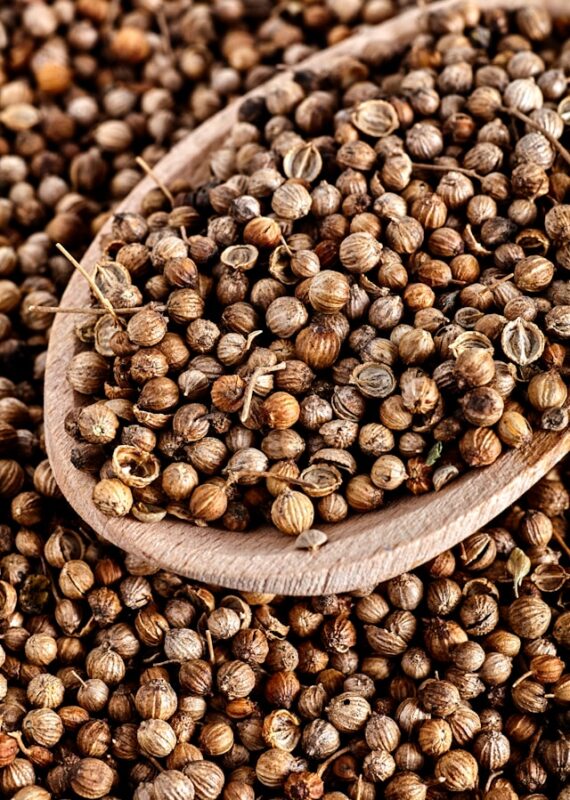
Coriander is the dried seed of Coriandrum sativum, an aromatic annual plant in the parsley family. The plant produces leaves and seeds that both have commercial value, but in international agritrade, the term coriander often refers specifically to the dried seed, while the fresh green leaves are frequently called cilantro in some markets. This distinction matters in trade communication because buyers do not always use the same terminology. A buyer asking for cilantro may mean fresh herb, while another may mean the same plant generally. In export documentation and commodity discussion, it is safer to specify coriander seed when the dried seed is the intended product.
The seed is small, round, light brown to beige, and carries a warm citrusy, slightly nutty, mildly sweet spice profile when clean and properly dried. The aroma becomes more pronounced when the seed is crushed or lightly roasted. Good coriander should smell fresh, bright, and spicy. Poor coriander often smells dusty, old, flat, mouldy, or weak, especially if the lot absorbed moisture after drying or sat too long in poor storage conditions.
From a commercial standpoint, coriander is valuable because it performs well in both direct-use and processed-use markets. It can be sold as a whole spice, milled into powder, added into mixed seasoning systems, extracted for essential oil, or incorporated into functional food and wellness products. That flexibility broadens the buyer base and supports regular demand across multiple industries.
In Nigerian and West African trade references, coriander may not always be as locally dominant as pepper, ginger, turmeric, or sesame, but it remains relevant for exporters serving ethnic food channels, industrial spice users, and international buyers looking for cleaned seed lots from disciplined aggregators. It is especially attractive to buyers that want a spice with familiar global demand, workable shelf life, and room for margin improvement through sorting, grading, and value-added repacking.
One practical thing every buyer should understand is that coriander is not a one-grade-fits-all commodity. Different buyers want different seed sizes, colours, aroma levels, and cleanliness thresholds. A wholesale market buyer may accept a broader tolerance. A spice miller supplying retail packs may insist on tighter quality. A premium seasoning brand may ask for stronger aroma, lower foreign matter, and cleaner visual presentation. That is why coriander sourcing should always begin with a written specification rather than a generic request for coriander seed.
How Coriander Is Made / Processed
The commercial quality of coriander is shaped long before it is packed into export bags. Harvest timing, field hygiene, drying discipline, cleaning method, sorting efficiency, and warehouse handling all influence the final quality a buyer receives. When exporters understand the processing chain well, they are better able to deliver coriander that remains stable through ocean transit and arrives fit for food use.
1. Cultivation and field development
Coriander is grown for seed under conditions that favour healthy plant development and proper seed formation. Agronomically, the crop performs best when planting, field management, and harvest timing are properly coordinated. For export-quality seed, what matters commercially is not just whether the crop was grown, but whether it matured evenly enough to support uniform harvesting and cleaner post-harvest handling.
Fields intended for serious commercial supply should be monitored for weed pressure, pest issues, and harvest readiness. Heavy field contamination at this stage can later increase cleaning losses, reduce usable yield, and raise the risk of foreign matter complaints from buyers. Exporters who work with disciplined growers or structured aggregators usually manage this stage better than traders who buy blindly from scattered lots without traceability.
2. Harvesting at the right maturity stage
Coriander seed should be harvested when it has developed properly and reached suitable maturity for drying and storage. Harvesting too early can produce shrivelled seed with poor aroma, lower weight, and weaker commercial value. Harvesting too late can increase field loss, shattering, contamination, or weather damage. Good harvesting practice supports better seed fullness, more stable colour, and stronger aroma retention during storage.
For buyers, maturity matters because immature coriander may still pass a casual visual check but underperform in milling, flavour release, and end-use acceptance. That is why the best exporters do not just quote price; they explain harvest season, origin area, and lot profile.
3. Drying after harvest
Drying is one of the most important quality control points in coriander trade. Freshly harvested material must be dried properly to bring moisture down to a safe trading range. If drying is rushed, uneven, or done on contaminated surfaces, the seller may end up with coriander that looks dry externally but still carries internal moisture pockets that later cause clumping, mould risk, odour issues, or insect activity in storage.
Good drying should preserve aroma while reducing the risk of spoilage. Overheating the product can flatten flavour. Under-drying can destroy a shipment later. This is why moisture measurement should never be guessed. Export coriander should be checked with proper instruments and matched against buyer tolerance before bagging.
4. Threshing and seed separation
Once the harvested plant material is ready, the seed must be separated from stalks and unwanted plant matter. This step influences both cleanliness and final recovery. Poor threshing methods can increase breakage, introduce dirt, or leave too much chaff in the lot. Buyers who plan to repack or mill coriander usually prefer lots that have already gone through reasonable primary cleaning because excessive field waste increases processing cost after arrival.
At this stage, exporters should already start thinking like the buyer. If the lot is intended for industrial processing, it still needs to arrive commercially acceptable. Sending heavily contaminated coriander and expecting the buyer to “clean it there” is often a false economy because it damages trust, increases claims risk, and weakens repeat order potential.
5. Cleaning and removal of foreign matter
After threshing, coriander should pass through cleaning systems that remove dust, stones, stems, husk, immature particles, and other foreign materials. This is one of the most commercially visible processing stages because buyers immediately notice whether a lot has been cleaned professionally or handled carelessly. Good cleaning improves appearance, food safety positioning, usability, and price acceptance.
Some buyers want standard commercial cleaning. Others want machine-cleaned lots with tighter foreign matter limits. Premium buyers may also ask for colour sorting or a stricter tolerance on damaged and black seeds. The exporter should know the target segment before deciding how far to take the cleaning process.
6. Grading and lot selection
Coriander is not always traded under one universal grade system, but buyers still evaluate lots in practical grade terms. They look at boldness, uniformity, colour, aroma, dryness, and cleanliness. Some will accept mixed commercial size if aroma is strong and cleaning is good. Others want bolder rounder seeds with more uniform presentation. The exporter must separate lots where possible rather than blending everything together and hoping it passes.
Lot discipline is especially important when multiple procurement sources are combined. If one lot is stronger and another is weaker, careless blending may reduce the value of the entire consignment. Smart exporters protect consistency because repeat buyers care more about predictable supply than one-off low quotations.
7. Packing for storage or export
Once coriander has been cleaned and checked, it should be packed into suitable export bags that protect against moisture ingress, contamination, rough handling, and warehouse instability. Depending on the buyer and route, common options include polypropylene woven sacks, laminated bags, or kraft-lined solutions. The right bagging choice often depends on humidity exposure, transit duration, container conditions, and whether the buyer wants retail repacking or industrial use.
Well-packed coriander should remain dry, stackable, and traceable. Bags should be stitched properly, marked clearly, and prepared in a way that simplifies counting, loading, and post-arrival verification. Weak bagging is a common but avoidable trade problem that can turn a clean lot into a complaint during discharge.
8. Storage before shipment
Storage is where many otherwise decent coriander lots begin to fail. Even properly dried seed can reabsorb moisture in a poorly ventilated warehouse. It can also pick up odours, attract insects, or suffer bag damage if stacked carelessly. A serious exporter stores coriander in a clean, dry, pest-managed environment away from leaks, chemicals, strong-smelling goods, and direct floor moisture.
For buyers, this step matters because cargo quality at destination often reflects warehouse discipline at origin more than the quality of the field crop itself. A supplier that cannot describe storage conditions clearly is usually not ready for dependable export trade.
What Is Coriander Used For?
Coriander has broad commercial utility, which is one reason it remains active in international spice trade. Its appeal comes from the fact that it can function as a direct-use spice, a base note in seasoning systems, a processing input, and a value-added ingredient in wellness or speciality products.
Culinary spice applications
The most obvious use of coriander is in food preparation. Whole coriander seed is used in pickling, slow cooking, soup bases, curry systems, meat rubs, marinades, and spice roasting blends. Ground coriander appears in seasoning mixes, sausages, baked products, sauces, snacks, sauces for ready meals, and commercial spice blends. Its flavour is warm, slightly citrusy, mild enough to work with stronger spices, and versatile enough to bridge regional cuisines.
For industrial buyers, coriander is useful because it adds aromatic complexity without overwhelming other ingredients. In a blend, it can support cumin, turmeric, pepper, fennel, ginger, garlic, paprika, and chili very well. That makes it a common component in both premium and mainstream spice formulas.
Spice blending and seasoning manufacture
Coriander is a practical workhorse in the seasoning industry. Spice blenders use it as part of curry powders, masala systems, barbecue rubs, dry seasoning compounds, bouillon flavour systems, shawarma blends, soup seasonings, and ethnic retail spice mixes. Depending on formulation, it may serve as a flavour contributor, aroma softener, balancing note, or bulk spice component.
This is commercially important because buyers in this segment often purchase in larger volumes and care deeply about consistency. If the coriander aroma fluctuates too much from one lot to another, the buyer’s final blend also changes. That is why processors prefer exporters who can maintain profile stability.
Milling and repacking
Many importers buy coriander whole and process it after arrival. They may clean it again lightly, grind it, sieve it, blend it, and repack it under their own brand. Whole-seed procurement allows them to control freshness and reduce the risk that weak powder or adulterated powder enters their production line. Exporters serving this segment should understand that the importer is buying a processing input, not just a finished spice.
Herbal and wellness preparations
Coriander seed is also used in herbal mixtures, digestive blends, teas, and traditional wellness applications. Buyers in this category may look for food-grade material with strong natural aroma, low contamination risk, and acceptable microbial profile depending on the target market. Some will also request cleaner visual presentation because the product may be sold in transparent packs or used in visible tea blends.
Essential oil and extract applications
In some markets, coriander seed is processed for essential oil and other value-added derivatives. These uses place greater emphasis on aroma profile and oil-bearing quality than on retail visual appeal. Exporters targeting this segment should understand that the buyer may test the lot based on extraction potential, odour quality, and chemical consistency rather than simply appearance.
Bakery and processed food systems
Coriander can also appear in bread spice mixes, savoury crackers, processed meat seasoning, sauces, and packaged foods where manufacturers want a rounded aromatic note without excessive heat. It supports flavour layering in both traditional and modern formulations and therefore remains relevant to factories, not just spice traders.
Health Benefits of Coriander
Coriander is traded primarily as a spice commodity, but buyers in the wellness and functional food segment also value it for its traditional and nutritional associations. Commercial claims should always be made carefully and in line with the destination market’s labelling laws, but it is still useful to understand why coriander remains attractive in health-focused product categories.
1. It is commonly associated with digestive comfort
Coriander seed has a long traditional reputation for supporting digestion. In many food cultures, it is used in meals not only for flavour but also because it is seen as a spice that sits well in the stomach, especially when paired with richer foods, legumes, meats, and blended seasonings. This makes it commercially relevant in herbal teas, digestive spice blends, and wellness-positioned food products.
2. It contains naturally occurring antioxidant compounds
Like many aromatic spices, coriander contains plant compounds that contribute to its sensory and nutritional appeal. This gives it some relevance in conversations around natural ingredients and functional food systems. Buyers in premium food and health channels often prefer spices that offer both flavour and a broader wellness narrative.
3. It is useful in lighter seasoning systems
One practical benefit of coriander is that it helps build flavour depth without relying entirely on salt, sugar, or excessive heat. Food formulators can use it as part of a more balanced spice profile. In that sense, coriander contributes to flavour development in a way that can support cleaner-label or more naturally positioned food products.
4. It is attractive in herbal infusion products
Coriander seed is often included in herbal tea and infusion blends aimed at digestive balance, aromatic comfort, and traditional wellness use. This widens its trade relevance beyond mainstream food channels and creates another buyer class that values good seed quality and proper drying.
5. It fits into natural ingredient marketing
Consumers increasingly favour ingredients they recognise and can pronounce. Coriander benefits from that trend. It is familiar, culinary, and naturally derived. For exporters and processors, this helps position coriander within broader clean-label and natural-food supply chains.
6. It can support diversified product development
Because coriander moves across culinary, herbal, and processing channels, buyers can use one core raw material in multiple products. That makes it commercially efficient for repackers, health brands, spice houses, and distributors who want a spice ingredient that can perform in more than one category.
Side Effects of Coriander
Although coriander is widely used and generally well tolerated in food applications, responsible trade communication should also recognise its limitations. Serious buyers, especially those selling into regulated markets, do not want exaggerated claims. They want balanced product information that acknowledges practical considerations and potential sensitivity issues.
1. Allergic sensitivity in some users
As with many spices and herbs, coriander may trigger sensitivity in some individuals. This is not the norm for most consumers, but importers, repackers, and finished-product brands should still manage labelling and cross-contact risks carefully. Buyers who process multiple spices in one facility should also consider allergen-control and contamination protocols even where coriander itself is not a major allergen category.
2. Overconsumption concerns in concentrated use
Normal culinary use is usually straightforward, but very high intake through concentrated herbal preparations, supplements, or heavily spiced formulations may not be suitable for every consumer. Exporters should therefore avoid medical language or dosage-style promises when marketing food-grade coriander.
3. Quality-related side effects from poor processing
Many product complaints blamed on the spice itself are actually quality problems. Coriander that is mouldy, improperly dried, insect-damaged, chemically contaminated, or poorly stored may create safety issues or negative consumer reactions. This is one of the strongest reasons buyers insist on moisture control, proper storage, and where needed, food safety documentation.
4. Pesticide residue risk
One of the real trade risks in spice exports is residue non-compliance. If coriander is grown or stored with poor chemical discipline, it can fail buyer testing, especially in more tightly regulated destinations. This is not a side effect of coriander as a product, but a sourcing risk connected to production and supply-chain behaviour. Importers should test when necessary and work only with exporters that understand compliance requirements.
5. Powder adulteration risk
Ground coriander introduces another practical issue. Once a spice is milled, visual verification becomes harder. Poor operators may blend in inferior material, stale stock, or non-declared matter to increase margin. That is why many experienced buyers prefer whole coriander and mill it under controlled conditions after import.
6. Shelf-life decline when handled badly
Coriander does not usually fail suddenly; it often fades gradually. Improper storage can reduce aroma, increase dustiness, and shorten marketable shelf life. Buyers should therefore understand that one of the most common “side effects” in trade is not toxicity but quality deterioration caused by moisture, heat, light, or prolonged exposure in bad packaging.
Top Producing & Exporting Countries of Coriander
Coriander is grown and traded in several regions, but some countries stand out because of scale, market familiarity, and recurring export presence. Buyers should watch these markets not only because they dominate trade, but because they often shape price expectations and seasonal availability.
1. India
India is one of the best-known coriander-producing and exporting countries in the world. It has deep market familiarity, large domestic use, active spice trading networks, and broad export relationships. Many international price references for coriander still look toward Indian market sentiment, especially when discussing commercial seed lots for spice use. Buyers often use Indian offers as a benchmark when assessing competitiveness from other origins.
2. Russia and Eastern European supply regions
Russia and parts of Eastern Europe have long been associated with coriander production and export activity. These origins are relevant because they supply sizeable volumes into different markets and can influence availability patterns depending on season, logistics, and geopolitical conditions. Buyers monitoring bulk coriander trade often keep an eye on these regions when comparing origin options.
3. Bulgaria
Bulgaria appears regularly in coriander trade discussions and has recognition in spice supply chains. It is particularly relevant in certain European sourcing circles and remains part of the broader conversation around established coriander origins.
4. Morocco
Morocco is another recognised producing and exporting country in the coriander space. Its participation is important for buyers evaluating North African origin options, especially where Mediterranean trade routes or regional sourcing relationships are commercially useful.
5. Canada
Canada is known in global spice and seed trade for reliable agricultural export systems and appears in coriander discussions among notable exporting countries. Buyers that value structured documentation, agricultural discipline, and consistent contract handling often track Canadian supply alongside other major origins.
6. Other active origins
Other countries also participate in coriander production and export, including selected Mediterranean, Middle Eastern, and African markets. However, not every producing country is automatically a reliable export source. The difference lies in cleaning capacity, documentation strength, pesticide management, storage discipline, and shipment execution.
For a buyer, the real lesson is simple: “producing country” and “dependable export source” are not always the same thing. A country may grow coriander, but that does not mean every trader in that country can meet the buyer’s technical expectations. Export reliability is built through process, not nationality.
Top Importing Countries of Coriander
Coriander demand is spread across food-processing economies, spice-consuming regions, diaspora markets, and countries with strong seasoning and repacking industries. Import demand is often shaped by culinary culture, industrial spice use, and the presence of wholesalers serving ethnic food channels.
1. United States
The United States is a notable coriander importing market because it combines retail spice demand, industrial food processing, ethnic food distribution, and health-oriented product channels. Buyers serving this market often pay attention to food safety documentation, residue controls, and packing consistency, especially when the product enters branded retail or ingredient manufacturing chains.
2. India
Although India is a major producer, it can also appear in import discussions depending on product type, trade flow, season, and commercial demand. This reminds exporters that supply chains are not always one-directional. Large producing countries may still import selected lots or related product forms when market conditions justify it.
3. Malaysia and Southeast Asian markets
Malaysia and neighbouring Southeast Asian markets are commercially relevant because coriander is widely used in regional food systems, spice blending, and distribution channels. These markets can be attractive for exporters that understand halal-sensitive trade expectations, consistent packing, and commercial spice specifications.
4. United Kingdom and wider Europe
The United Kingdom and other European markets are important destinations for coriander due to strong ethnic food consumption, spice blending, retail packaging, and foodservice demand. However, these markets can also be more demanding on traceability, residue profile, packaging, and documentary compliance.
5. Middle Eastern and North African markets
Coriander also moves strongly into several Middle Eastern and North African markets where spice use is culturally established and wholesale turnover remains active. Buyers here may prioritise aroma, competitive landed cost, practical packaging, and reliable shipment timing.
6. African regional markets
Intra-African spice trade should not be ignored. There is room for coriander movement into regional wholesale networks, food processors, seasoning blenders, and distributors serving urban markets. Exporters that understand regional freight patterns, border documentation, and manageable lot sizes may find attractive opportunities here.
How To Safely Source for Your Coriander Produce
Safe coriander sourcing is not about finding the lowest quotation. It is about reducing the risk that the shipment fails commercially after payment has already been made. A buyer who sources carelessly may end up with a container of weak, dusty, damp, insect-prone, or non-compliant spice that becomes expensive to salvage. The goal is therefore to secure coriander that is commercially fit, document-ready, and consistent with the buyer’s intended use.
Start with a written product specification
Before approaching suppliers, define the product exactly. State whether you need whole seed or powder. State the target use. State expected moisture, acceptable foreign matter, packaging size, origin preference, cleanliness level, and whether any microbiological, pesticide, or heavy metal testing is required. Many sourcing failures happen because the buyer asks for “coriander” and the seller fills the gap with assumptions.
Request recent product photographs and videos, but do not stop there
Visual evidence is useful, but it is not enough. A short video can show the current lot, warehouse, bagging line, and loading environment. Even so, good-looking coriander can still fail on aroma, moisture, or contamination. Treat photos as an opening check, not as proof of quality.
Insist on a representative sample
A proper sample is one of the most important safeguards in spice trade. It should represent the actual lot to be supplied, not a handpicked premium sample unrelated to the shipment. Buyers should assess aroma, cleanliness, colour, seed uniformity, dust level, and visible foreign matter. If the transaction is sizeable or the destination market is sensitive, the sample should be laboratory tested before contract confirmation.
Verify moisture and dryness properly
Moisture is a decisive risk point. Coriander with excess moisture may look acceptable at origin yet arrive caked, musty, or infested after sea transit. The exporter should provide a measurable moisture reading, and where necessary, the buyer should verify through independent testing. Never rely on phrases like “sun-dried very well” as a substitute for actual moisture control.
Understand the supplier’s cleaning process
Ask how the coriander is cleaned. Is it hand-sorted, machine-cleaned, gravity-separated, destoned, sieved, or colour-sorted? What foreign matter tolerance can the supplier support? Can they deliver one consistent lot size at the promised standard? These questions separate traders with process control from brokers who are simply chasing a deal.
Check storage conditions
Ask where the coriander is stored before shipment. Is the warehouse dry, ventilated, elevated, and pest-managed? Are the bags stacked on pallets? Is the product kept away from chemicals, fertilisers, fuel odours, and damp walls? Spice buyers should care about warehousing because coriander absorbs bad handling quickly.
Clarify whether the exporter can support destination compliance
Different markets demand different documents and tests. Some may require phytosanitary certification as standard. Others may expect residue control, food-safety records, fumigation details, or additional declarations. An exporter who does not understand destination requirements may still collect payment and then fail at the documentation stage. That is avoidable if compliance is discussed early.
Prefer whole seed for larger and more sensitive transactions
Unless the buyer specifically needs powder, whole coriander is usually the safer bulk trade choice. It gives more control over freshness, reduces adulteration risk, and handles storage more predictably. Powder can still be a valid product, but it requires a higher level of trust, process control, and testing discipline.
Use practical payment milestones
Payment should match transaction risk. Avoid full prepayment to an unproven supplier for a large coriander order. Safer options include deposits tied to stock reservation, balance against shipping documents, structured escrow where available, or a letter of credit for larger institutional trades. The exact structure depends on relationship history, order size, and market norms, but the core principle remains the same: never expose all your cash before the seller proves execution.
Use pre-shipment inspection where justified
For larger or first-time transactions, third-party inspection can be worth the cost. The inspection may cover quantity, bagging, packing marks, visual cleanliness, container condition, and sometimes sampling for agreed tests. Inspection will not solve every problem, but it can reduce the chance of obvious disputes later.
Inspect the container loading logic
Coriander should move in a clean, dry container free from odour, leaks, and prior contamination. Bags should be loaded in a way that reduces movement and damage. If the route or climate suggests condensation risk, exporters should consider moisture-control measures. A good product can still arrive in bad condition if loaded into a poor container.
Document everything in the sales contract
The contract should clearly state product description, quantity, tolerance, packaging, unit price, total value, quality parameters, shipment window, Incoterm, payment terms, inspection arrangement, and dispute basis. Many spice disputes become messy simply because nothing meaningful was written down before payment.
In practice, safe coriander sourcing means reducing avoidable surprises. The strongest buyers are not necessarily the ones who buy cheapest. They are the ones who ask the right questions before cargo is booked.
Where To Find Reliable Exporters for Coriander
Reliable coriander exporters are rarely identified by polished marketing alone. They are usually recognised by process discipline, responsiveness, document readiness, and their willingness to discuss product quality in measurable terms. Buyers should therefore search for exporters in places where commercial credibility can actually be tested.
One route is through specialised commodity exporters that already handle dried spices, herbs, and agricultural food ingredients in bulk. Suppliers in this category are usually more familiar with moisture control, export bagging, shipment documentation, and buyer specification matching than casual domestic traders.
Another route is through verified trade referrals from importers, processors, and logistics partners who already work in spice movements. A referred exporter may not always be the cheapest, but referred suppliers often reduce the risk of basic execution problems. In commodity trade, trusted introductions can save far more money than aggressive bargain hunting.
Industry events, B2B trade platforms, export promotion channels, and chamber-linked trade networks can also help identify possible suppliers. However, no discovery channel should replace due diligence. Every supplier still needs to be checked for product familiarity, operational capacity, sample quality, and documentation competence.
For buyers sourcing from Africa, it is usually wise to work with exporters that understand both local procurement realities and international buyer expectations. The best exporters can translate local aggregation into export-grade consistency. They know how to secure the right lot, clean it properly, pack it for sea freight, and support the paperwork needed for a clean transaction.
The real sign of a reliable coriander exporter is not the promise of “best quality.” It is the ability to answer practical questions clearly. Can they describe origin? Can they define the lot? Can they send a representative sample? Can they confirm moisture and foreign matter? Can they meet the shipment window? Can they support the required documents? Can they hold quality from sample to loading? Those answers matter more than promotional language.
International Price of Coriander Per Metric Ton
International coriander pricing depends on origin, season, grade, cleanliness, aroma strength, container quantity, destination, and whether the product is sold as standard commercial whole seed, premium selected whole seed, or processed powder. Freight conditions and destination compliance requirements can also shift the final workable price considerably.
As a realistic working guide for 2025 to 2026 bulk trade, standard export-grade whole coriander seed commonly falls around US$900 to US$1,400 per metric ton for mainstream commercial lots, while stronger premium-selected or cleaner bold-seed lots can move higher depending on origin and contract terms. Ground coriander, especially where finer processing, controlled mesh size, or stronger compliance requirements are involved, can trade at a higher range due to additional processing and handling costs.
Buyers should be careful with extremely low offers. A very cheap coriander quotation often means one of several things: weak aroma, poor cleaning, high foreign matter, mixed lots, poor packing, uncertain origin, stale stock, or a seller who intends to renegotiate later. In spice trade, a low quote is only attractive if the seller can still prove quality and execute professionally.
It is also important to separate raw product price from landed cost. Ocean freight, inland haulage, export documentation, inspection, payment charges, fumigation where required, customs procedures, and destination clearance all influence the final economics. A buyer may secure a good FOB price and still end up with an uncompetitive landed cost if logistics were not planned well.
For first transactions, buyers are usually better off focusing on value consistency rather than chasing the bottom of the market. A coriander lot that arrives clean, aromatic, dry, and compliant is usually more profitable than a cheaper lot that causes re-cleaning losses, quality discounts, or customer complaints after arrival.
Request a Quote or Speak With Our Team About Coriander
Ready to source Coriander with confidence? Submit your RFQ for detailed specifications and formal quotations, or chat on WhatsApp for fast responses and quick clarification.
How To Pay For Your Coriander Produce
Payment for coriander should be structured around trust level, order size, and transaction complexity. The right payment method protects both buyer and seller and reduces the chance of avoidable disputes.
For trial orders and first transactions
Small trial orders often use a deposit-and-balance structure. The deposit helps the exporter secure stock, process the order, and prepare for shipment. The balance may then be settled against agreed shipment milestones or against copies of shipping documents, depending on the relationship and market practice. The key point is that the buyer should not overexpose funds before the exporter proves stock control and shipment readiness.
For medium-volume recurring trade
Once both parties have established confidence, payment terms may become more flexible. Some buyers continue with deposits and document-based balances. Others negotiate staged settlements tied to inspection, loading, or bill of lading issuance. What matters most is clarity. Every payment milestone should be written into the contract.
For larger institutional or higher-risk deals
For sizeable coriander shipments, a letter of credit may be the preferred route, especially where the buyer needs documentary discipline and the seller wants banking comfort. Letters of credit do add cost and process complexity, but they can reduce transaction risk where neither party wants to rely on pure trust.
Bank transfer and documentary control
Direct wire transfers remain common in commodity trade, but they should be backed by documentation. Buyers should ensure the beneficiary details match the contracting entity, not a random third party without explanation. Sellers should also issue clear proforma invoices, final invoices, packing details, and shipment documentation in a structured way.
Why payment terms should reflect supplier history
A proven supplier with a clean history, strong communication, and consistent delivery may justify smoother payment terms over time. A new supplier should not. Payment confidence should be earned, not assumed. Buyers that apply this principle usually avoid the most common export scams and execution failures.
Shipping & Delivery Terms
Shipping terms for coriander should be selected according to buyer capability, destination complexity, and the exporter’s logistical strength. A good shipment arrangement is one that allocates responsibility clearly and prevents confusion once cargo is on the move.
FOB for experienced importers
FOB works well for buyers that already control freight and destination logistics. Under this structure, the exporter handles product preparation, export clearance, and delivery to the port of loading, while the buyer manages ocean freight and onward movement. This is often attractive for established importers who want cost visibility and freedom to choose their own freight partners.
CFR for buyers who want simplified freight inclusion
CFR can be useful when the buyer prefers the exporter to include ocean freight up to the destination port. This can simplify negotiations and help the buyer model landed cost earlier. However, buyers should still understand which charges are included and which remain payable at destination.
CIF when insurance inclusion matters
CIF may be preferred where the buyer wants marine insurance included by the seller up to the named destination port. This can be useful in first transactions or routes with elevated transit concerns. Even so, the buyer should review what type of cover is actually being provided rather than assuming all insurance is equal.
Transit protection and container readiness
Because coriander is a dry food commodity, the shipment must be protected against moisture, odour contamination, and rough handling. The container should be clean, dry, and fit for food cargo. If the route or season suggests condensation risk, extra care may be needed to reduce damage in transit.
Delivery scheduling and shipment window
The shipment window should be realistic. Sellers should avoid promising impossible loading dates simply to secure an order. Buyers should also allow enough time for cleaning, packing, documentation, and transport to port. A rushed coriander shipment often creates preventable errors.
Partial shipment and tolerance discussion
Where applicable, the contract should state whether partial shipment is allowed, what quantity tolerance applies, and whether split lots are acceptable. Clear terms reduce disputes and make container planning more efficient.
Our Typical Trade Specifications For Coriander
Exact specifications depend on the buyer’s market and intended use, but the table below reflects the type of practical specification framework many serious buyers work with when sourcing export-grade coriander.
| Specification Item | Typical Export Expectation |
|---|---|
| Product | Dried whole coriander seed |
| Botanical Name | Coriandrum sativum |
| Colour | Light brown to beige, reasonably uniform |
| Aroma | Fresh, characteristic, warm, citrusy, free from mustiness |
| Moisture | Typically 10% to 12% max depending on contract |
| Foreign Matter | Low and clearly defined in contract, often 1% to 2% max for standard cleaned lots |
| Infestation | Free from live insects |
| Mould / Off-Odour | Not acceptable |
| Processing | Cleaned, dried, sorted, export packed |
| Packing | 20kg to 50kg export bags, as agreed |
| Loading Condition | Clean, dry, odour-free container |
| Shelf-Life Goal | Best maintained under cool, dry, hygienic storage conditions |
These figures should not be treated as automatic promises. They should be written into the final contract and matched to the buyer’s intended destination. The right exporter will discuss the specification before quoting seriously, not after the buyer has already paid.
Expected Shipping Documents
Shipping documents are a major part of coriander trade security. Even when product quality is good, weak documentation can delay customs clearance, create payment problems, or expose the buyer to regulatory issues. Buyers should therefore align documentary requirements before the shipment is booked.
Commercial invoice
The commercial invoice should state the seller, buyer, product description, quantity, unit price, total value, and relevant shipment references clearly. The product description should match the contract and other documents closely to avoid clearance friction.
Packing list
The packing list should show bag count, net weight, gross weight, packaging format, and packing marks where applicable. This helps the buyer verify the shipment physically and supports customs and warehouse handling.
Bill of lading
The bill of lading is one of the key transport documents in seaborne trade. Buyers should confirm that shipment details, consignee structure, notify party, container information, and freight status are correct before the document is finalised.
Phytosanitary certificate
For many agricultural shipments, a phytosanitary certificate is a standard requirement. Buyers should confirm destination rules in advance and ensure the exporter can secure the certificate where needed.
Certificate of origin
The certificate of origin may be required for customs, tariff treatment, or buyer verification purposes. It should correctly reflect the product origin and be issued through the appropriate authorised channel.
Fumigation certificate where applicable
Depending on destination requirements, transit conditions, and product handling method, a fumigation certificate may be requested. This should be discussed early because not every market treats fumigation the same way.
Inspection certificate where agreed
If the contract includes third-party inspection, the resulting certificate should reflect the agreed scope, whether that covers quantity, visual quality, packing, loading, or sampling protocol.
Laboratory test reports where required
Some coriander buyers request moisture analysis, microbiological checks, pesticide residue testing, or other food safety reports before shipment or before final payment. These tests should be agreed in advance so both parties know the standard being used.
Request a Quote or Speak With Our Team About Coriander
Ready to source Coriander with confidence? Submit your RFQ for detailed specifications and formal quotations, or chat on WhatsApp for fast responses and quick clarification.