

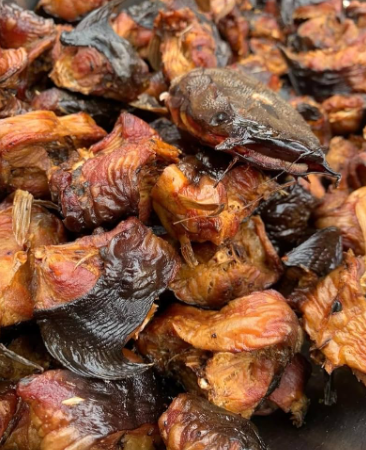
Catfish cutlet is one of those seafood products that sits quietly inside the wider African food trade but carries more commercial value than many new buyers first assume. In practical trade language, catfish cutlet usually refers to cut portions or sections of catfish that have been cleaned, dressed, smoked, and dried for storage, distribution, wholesale supply, and retail sale. In some markets, it may refer to selected middle cuts, body sections, or processed pieces prepared from catfish rather than the entire fish being sold whole. In Nigeria and in many diaspora food channels, buyers often use the term to describe smoked and dried catfish portions that are easier to cook, easier to pack, and easier to sell by count, pack, or weight.
For importers, distributors, ethnic food wholesalers, supermarket buyers, foodservice operators, and private-label African food brands, catfish cutlet is commercially useful because it combines familiarity, convenience, and traditional culinary value. It offers the same smoky flavour profile associated with dried catfish, but in a more portioned form that can appeal to households, caterers, and resellers who prefer ready-cut pieces instead of full fish. That simple difference in presentation can matter a great deal in trade because convenience often improves sell-through.
In the Nigerian market, catfish cutlet may also be described in practical terms such as smoked catfish cuts, dry catfish cuts, catfish pieces, or dried catfish cut portions, depending on the seller, region, and processing style. The most common species reference for Nigerian commercial catfish remains Clarias gariepinus, which is widely farmed, widely consumed, and strongly embedded in local and regional food systems. As with other value-added fish products, however, the trade success of catfish cutlet depends less on the name alone and more on how well the product is processed, graded, packed, and documented.
That is where many buyers either build margin or lose money. A well-prepared catfish cutlet product can move efficiently through ethnic grocery channels, export cartons, wholesale fish trade, foodservice kitchens, and diaspora distribution networks. A poorly prepared one can develop moisture problems, infestation issues, smoky bitterness, objectionable odour, or breakage losses that eat into both profit and reputation. So while the product may look simple, the buying process should not be casual.
Catfish cutlet belongs to the larger trade family of smoked and dried fish products that remain highly relevant in African cuisine. These products are prized not only because they preserve protein longer than fresh fish, but because they carry a strong taste identity that consumers actively seek out. A buyer sourcing catfish cutlet is therefore not just buying seafood. They are buying a culturally recognizable ingredient used in soups, sauces, stews, rice dishes, and home cooking traditions where flavour depth matters as much as nutrition.
For serious buyers, the right approach is to understand the product from both sides at once. One side is culinary demand. The other is commercial control. You need to know what the end customer wants in terms of aroma, size, dryness, colour, and ease of cooking. At the same time, you need to know what can go wrong during production, storage, packaging, transit, customs clearance, and shelf handling.
This guide looks at catfish cutlet from that practical trade angle. We will cover what it is, how it is made, what it is used for, the health benefits associated with it, the realistic side effects and sourcing concerns buyers should understand, top producing and importing markets, how to source it safely, where to find dependable exporters, what realistic international prices look like in the 2025 to 2026 market environment, how payment is usually handled, what shipping terms are common, the type of trade specifications buyers often request, and the key shipment documents expected in a commercial seafood transaction.
Trade Overview of Catfish Cutlet
Catfish cutlet is a processed seafood product prepared from catfish that has been cut into portions or selected sections, then smoked and dried for commerce. In the Nigerian market, the product fits between whole dried catfish and smaller dried fish fragments. It is often preferred by buyers who want the flavour and familiarity of dried catfish but in a more convenient form for packing, resale, portion control, and kitchen use.
From a trade point of view, catfish cutlet benefits from several strong market characteristics. First, catfish itself is already one of the most commercially established fish species in Nigeria’s aquaculture sector. Second, smoked and dried fish products remain deeply rooted in household food habits, foodservice demand, and diaspora consumption. Third, cutlet presentation adds convenience, which is especially useful for resellers and retail buyers who do not always want to handle whole fish.
In wholesale distribution, catfish cutlet can be sold by pack, by kilogram, by carton, or by piece count depending on how the supplier has processed and packed it. In export channels, it is particularly attractive to African grocery distributors and ethnic food shops because it can fit neatly into mixed food import programs alongside crayfish, stockfish, dried shrimp, bitter leaf, scent leaf, ogbono, egusi, iru, and spice lines. That basket compatibility helps the product move more easily in established trade routes.
Commercially, catfish cutlet is also an example of value addition. Instead of selling live fish or fresh whole fish alone, the supplier turns raw catfish into a preserved, flavour-rich, more portable, and potentially higher-margin product. That matters in countries where cold-chain limitations, logistics pressures, and retail handling realities make preserved fish products especially practical.
| Product Name | Catfish Cutlet |
|---|---|
| Common Names | Catfish Cutlet, Smoked Catfish Cutlet, Dry Catfish Cutlet, Catfish Cuts, Dried Catfish Cuts |
| Botanical / Scientific Name | Clarias gariepinus is the most common commercial species reference in Nigeria |
| Product Category | Seafood |
| Form | Cut portions or selected sections of catfish, cleaned, smoked and dried |
| Primary Nigerian Market Reference | Common in dried fish markets, seafood retailers, local processors, open markets, online food vendors, and diaspora supply channels |
| Typical Buyers | Importers, wholesalers, African food distributors, restaurants, caterers, ethnic supermarkets, resellers, and private-label food brands |
| Main Trade Advantage | Convenient portion format, strong traditional demand, easier retailing than whole fish, and good storage life when properly processed |
| Key Sourcing Concern | Moisture control, hygiene, smoke level, cut consistency, breakage, infestation risk, and packaging strength |
Request a Quote or Speak With Our Team About Catfish Cutlet
Ready to source Catfish Cutlet with confidence? Submit your RFQ for detailed specifications and formal quotations, or chat on WhatsApp for fast responses and quick clarification.
What Is Catfish Cutlet?
Catfish cutlet is a smoked and dried fish product made from catfish that has been cut into portions before or after dressing. In practical market usage, it refers to a portioned fish format rather than a whole-fish format. The goal is to make the product easier to handle, easier to cook with, and in many cases easier to sell in packaged units for wholesale or retail distribution.
The term can vary slightly by seller. Some suppliers use it for mid-body cuts. Some use it for selected fish sections after the head or tail has been removed. Some use it more broadly for smoked-dried catfish pieces that are larger and more structured than fish fragments but more convenient than whole fish. In Nigerian seafood trading language, however, the broad commercial meaning is usually clear enough: it is processed catfish sold in cut portions for food use.
This is not the same thing as fresh catfish steak in a chilled seafood counter, and it is not the same thing as a Western-style breaded fish cutlet. In the context of the Nigerian and African food trade, catfish cutlet is a preserved fish product with smoke character, low moisture, and cultural culinary relevance. It belongs to the dried fish market, not the frozen convenience food market.
That distinction matters because buyers sometimes approach the product with the wrong expectations. A food distributor serving African stores will usually want traditional smoke aroma, moderate firmness, and recognizable cut pieces. A mainstream seafood buyer unfamiliar with the category may expect something completely different. So a good exporter needs to understand exactly which customer segment is being served before processing begins.
At the consumer end, catfish cutlet is valued because it is easier to portion into cooking pots and often easier to store in smaller household quantities. At the trade end, it is valued because it can support multiple pack sizes, from loose bulk supply for caterers to sealed packs for retail shelves. That flexibility is one of the reasons the line remains commercially relevant.
How Catfish Cutlet Is Made / Processed
The processing method used for catfish cutlet determines almost everything the buyer will later experience, including colour, taste, shelf stability, odour, breakage level, and market acceptance. Serious sourcing therefore begins with understanding how the product is made.
1. Selection of suitable catfish
The process begins with selecting healthy catfish of appropriate size and body quality. Fish that are too small may give poor cut yield and weak presentation. Fish that are too large may create pieces that do not fit the preferred pack style of the target market. Processors usually prefer mature fish with good flesh structure, no obvious disease signs, and minimal external damage. For buyers who expect consistency, sorting by weight before slaughter is important.
Good product starts with good raw material. If the fish are already stressed, poorly handled, or of uneven size at harvest, the final cutlets will also be inconsistent. That is why buyers should pay attention to the processor’s raw fish sourcing model, not just the finished pack.
2. Slaughtering and primary cleaning
After harvest, the fish are slaughtered and cleaned. This stage should remove slime, dirt, blood, and surface contamination. Hygienic handling matters immediately because fish flesh is highly sensitive to poor sanitation. If the washing water is poor or the work surfaces are unclean, the product may already begin to develop quality issues long before it reaches the smoking stage.
In better processing systems, workers use clean water, dedicated surfaces, and organized workflow to reduce contamination risk. The more disciplined this stage is, the easier it is to achieve a final exportable product.
3. Gutting and dressing
The fish are gutted so the internal organs are removed. This is a critical stage because retained viscera can increase spoilage risk, affect odour, and reduce shelf life. Depending on buyer requirements, the fish may also be trimmed, washed internally, and prepared for portioning. Some processors remove the head first. Others process the fish in a way that allows different cut sections to be separated later.
For catfish cutlet, the dressing stage must support the portion format that the buyer wants. That means clear communication between supplier and buyer is essential before production starts.
4. Cutting into portions
This is the stage that makes catfish cutlet different from whole dried catfish. The fish are cut into selected sections or portioned pieces. Depending on processor style, these may be middle cuts, body sections, or other defined portions. The purpose is to create a consistent, useful unit for cooking and packaging.
Cut consistency is commercially important. If the supplier mixes large thick pieces with tiny thin pieces in the same lot, the drying will be uneven and the pack will look inconsistent. That can create customer complaints, especially in retail channels where appearance matters as much as flavour.
5. Smoking the fish cuts
The cut portions are then placed in a kiln, smoke chamber, oven-drying system, or other smoking arrangement. Smoke contributes both preservation support and the flavour profile consumers expect. The heat also begins reducing moisture. Traditional processors may rely on wood-fired methods, while more controlled processors may use improved smoking units with better airflow and temperature control.
The challenge here is balance. Under-smoking can leave the fish lacking its expected character. Over-smoking can blacken the product, leave too much soot, and create a bitter finish. The best catfish cutlet has a clean smoked aroma rather than a harsh burnt note.
6. Drying to commercial stability
After or during smoking, the fish cut portions continue drying until they reach the target firmness and moisture level. This step is critical because moisture is one of the main reasons dried fish shipments fail. Under-dried fish may appear acceptable at dispatch but soften, mould, or spoil later. Over-dried fish may become too brittle and arrive with excessive breakage.
For export buyers, controlled drying is one of the strongest indicators of supplier competence. A processor who can explain their dryness target and show stable batch results is usually safer to work with than one who simply says the fish is dry enough.
7. Cooling before packing
Once drying is complete, the fish should be allowed to cool before packaging. This is a small detail that matters greatly. Packing warm product can trap residual heat and create condensation inside the pack. Condensation can then damage texture, encourage mould, and shorten keeping quality. Proper cooling helps stabilize the cutlet before it enters its package.
8. Sorting and grading
After cooling, the cutlets are sorted by size, appearance, dryness, and physical condition. Broken fragments may be separated from premium portions. Burnt pieces, under-dried pieces, or contaminated pieces should be removed. In export trade, this stage often determines whether a supplier is operating like a serious processor or simply like a volume trader.
9. Final packaging
The product is packed according to the intended market. Loose local-market packing may differ from export-ready packing. Retail programs may require sealed pouches, labels, and traceability marks. Foodservice buyers may prefer bulk cartons with inner liners. What matters is that the packaging protects the fish from moisture, dust, insects, and rough handling throughout the distribution chain.
What Is Catfish Cutlet Used For?
Catfish cutlet is used widely in cooking because it combines flavour, convenience, and long storage life. Its commercial relevance comes from the fact that it is not a niche decorative product. It is a practical kitchen ingredient used repeatedly across households, restaurants, and ethnic food businesses.
Soup preparation
Catfish cutlet is commonly used in soups where smoky fish flavour is desirable. It can be rinsed and added directly to simmering soup pots, where it softens and contributes savoury depth. In many kitchens, the cutlet format is even more convenient than whole fish because the pieces are already easier to portion and easier to distribute in the pot.
Stews and sauces
The product is also used in stews, pepper sauces, tomato-based sauces, and traditional cooking bases that need a pronounced fish note. Since the pieces are already cut, many home cooks and caterers prefer them for faster preparation and easier serving. That practical ease of use helps support repeat retail demand.
Traditional rice and native dishes
Catfish cutlet can be used in rice dishes, yam-based dishes, and traditional one-pot meals where dried fish is used both as protein and seasoning support. In these applications, the product adds depth without requiring the buyer to maintain a fresh-fish cold chain.
Catering and foodservice kitchens
Restaurants, event caterers, canteens, and ethnic food vendors use catfish cutlet because it stores longer than fresh fish, can be bought in larger quantities, and is easier to portion into cooking operations. The cutlet format is especially useful in kitchens that want predictable piece sizes and faster preparation time.
Ethnic retail packs
Many importers and resellers supply catfish cutlet in retail-ready packs for African grocery stores and diaspora supermarkets. The cut format makes the product easier to present in pouches, trays, or sealed packs. That matters in markets where the customer wants visible convenience along with traditional authenticity.
Repackaging and private-label distribution
Bulk buyers also purchase catfish cutlet for repacking under their own labels. This is common where distributors want to build branded food lines for African consumers abroad. For that type of program, size consistency, clean appearance, and minimal breakage become especially important because the buyer’s own brand name is attached to the finished pack.
Health Benefits of Catfish Cutlet
Catfish cutlet is bought mainly for food use and culinary tradition, but it also offers practical nutritional value when hygienically processed and consumed as part of a balanced diet. For commercial buyers, this matters because modern consumers increasingly want products that deliver both flavour and nutritional credibility.
1. Good protein value
Catfish cutlet is a protein-rich fish product. Since the fish has been smoked and dried, much of the water is reduced, making the nutrients more concentrated by weight. Protein supports body maintenance, muscle repair, enzyme formation, and normal growth. This is one reason fish remains a preferred food category in many diets.
2. Useful mineral content
Fish products generally contribute minerals such as phosphorus and selenium, and depending on the product structure and consumption style, may also support intake of other useful nutrients. While catfish cutlet is not marketed as a medical supplement, it is valued as a nutrient-dense traditional food ingredient.
3. Convenient preserved protein
One of the practical health-related strengths of catfish cutlet is that it provides preserved animal protein in a form that stores longer than fresh fish. In settings where reliable refrigeration is expensive or inconsistent, preserved fish products can play an important role in household meal planning and food access.
4. Supports flavourful home cooking
Healthy eating is not only about nutrient charts. It is also about whether people can prepare satisfying meals consistently. Catfish cutlet helps improve the flavour of soups, stews, and sauces, making staple meals more enjoyable. That practical food value is part of why preserved fish remains relevant across generations.
5. Can encourage seafood consumption
Some consumers do not always have access to fresh seafood or may prefer not to manage fresh fish regularly. Catfish cutlet offers an accessible way to include seafood in meals more often, especially in diaspora markets where traditional preserved fish products are easier to store and cook with than fresh specialty fish.
Side Effects of Catfish Cutlet
Catfish cutlet has clear food value, but buyers should also understand the possible side effects and product risks associated with poor processing, poor storage, or unsuitable consumption. This is especially important when importing or distributing the product at scale.
1. Excess smoke residue concerns
If the product is badly smoked or overexposed to smoke, it may carry too much soot, dark residue, or an excessively burnt flavour. This is not just a sensory problem. It is also a quality signal that the processor may not have good control over production conditions. Premium buyers usually prefer a cleaner smoke character and a more disciplined finish.
2. Spoilage when drying is poor
The biggest practical risk in catfish cutlet trade is under-drying. If moisture remains too high, the product may soften in storage, develop mould, or produce off odours. Since many fish shipments move through multiple handling points, even a small moisture problem can become a major commercial loss by the time the goods reach the end market.
3. Infestation risk in weak packaging
Dried fish products can attract insects if stored or packed poorly. This is one reason buyers should evaluate not only the fish itself but also the warehouse, the final packaging materials, and the hygiene culture of the supplier. Infested product can destroy consumer trust very quickly.
4. Bone and hard fragment issues
Because catfish cutlet is a fish portion product, bones or hard structural parts may still be present. Traditional consumers understand this and cook accordingly, but importers serving mixed or unfamiliar markets should communicate this clearly. Proper description and handling expectations reduce complaints.
5. Sensitivity for people with fish allergies
Like other fish products, catfish cutlet is not suitable for people with fish allergies. Buyers serving formal retail channels should label the product appropriately as a fish product and ensure packaging does not create confusion for consumers who need allergen clarity.
6. Quality variation between suppliers
Not every side effect in trade comes from the food itself. Some come from inconsistency. One batch may be excellent while another may be too smoky, too wet, too fragile, or poorly cleaned. That is why quality control and batch verification matter so much in this product category.
Top Producing & Exporting Countries of Catfish Cutlet
Catfish cutlet is a specialized processed seafood line, so its trade geography is shaped less by global commodity exchange in the way frozen whitefish is traded and more by regional food culture, aquaculture activity, and diaspora demand. Still, several countries matter commercially.
1. Nigeria
Nigeria is the most commercially relevant origin for catfish cutlet in the African context because catfish farming is extensive, consumer familiarity is high, and smoked-dried fish processing is deeply established. Nigeria’s fish and aquaculture sector supports both domestic consumption and value-added processing, making it the natural reference market for this product. For buyers targeting West African and diaspora channels, Nigeria remains a leading sourcing origin.
2. Ghana
Ghana also participates in regional smoked fish trade and has consumer familiarity with preserved fish products. While catfish cutlet terminology may vary by supplier, the country remains relevant to buyers exploring smoked fish sourcing options for West African food markets.
3. Cameroon
Cameroon is part of the wider Central and West African dried and smoked fish economy. Demand for smoked fish in local cuisine and the presence of processors in regional fish trade make it a country worth noting for buyers comparing origin options.
4. Other West African regional processors
Beyond the best-known origins, smaller processors across West Africa also prepare smoked and dried fish products for local and cross-border trade. The challenge for international buyers is that not all of these suppliers operate with export-level documentation or packaging systems, so verification becomes especially important.
5. Specialty suppliers serving diaspora channels
In some cases, the most active exporters are not the largest fish producers overall but the suppliers who best understand diaspora grocery demand. They know how to process, pack, and describe the product in a way that fits African food retail abroad. That knowledge can be more important than sheer production size.
Top Importing Countries of Catfish Cutlet
The import demand for catfish cutlet is closely linked to diaspora food consumption, ethnic grocery distribution, African restaurant supply, and specialty food retail. The product is not always visible in mainstream seafood statistics under its trade name, but its market presence is very real in targeted distribution channels.
1. United Kingdom
The United Kingdom is one of the strongest destination markets for African food imports because of its large African diaspora community and well-developed ethnic grocery structure. Products like catfish cutlet fit well into this market because consumers are already familiar with smoked and dried fish categories and retailers know how to merchandise them.
2. United States
The United States remains a major diaspora food destination, with strong demand for African food products in metropolitan areas. For catfish cutlet, success in this market depends not only on demand but also on documentation, hygiene compliance, and importer readiness. The market can be rewarding, but it is not forgiving of informal export practices.
3. Canada
Canada is another meaningful market for African grocery imports. Ethnic food stores, online African food sellers, and regional distributors help create recurring demand for smoked and dried seafood products. Importers serving this market usually value clean packaging and stable quality.
4. Germany and continental Europe
Germany and several other European countries have diaspora communities that support niche demand for preserved African fish products. While the volume may be more targeted, the right importer relationships can sustain profitable recurring shipments.
5. Regional African destination markets
Catfish cutlet also moves within Africa through formal and informal trade routes. These markets may not always require the same retail packaging sophistication as overseas exports, but quality, dryness, and price still matter greatly.
How To Safely Source for Your Catfish Cutlet Produce
Safe sourcing is the difference between a repeat seafood line and an expensive mistake. Catfish cutlet may look straightforward, but the risks of moisture, poor hygiene, weak packaging, and inconsistent cutting are real. A buyer who wants stable commercial performance should build the transaction around product definition, supplier verification, testing, and lot control.
The first thing to do is define the product precisely. Do not ask for catfish cutlet without stating the size range, cut style, dryness level, smoke level, packaging format, and intended market. Do you want medium body sections, mixed cuts, premium cuts, or economical value cuts? Do you want retail packs or bulk cartons? Do you want a lightly smoked finish or a deeper traditional smoke note? The more specific you are, the less room there is for supplier interpretation.
The second step is to understand the supplier’s role in the chain. Are they the processor, a farm-linked producer, a consolidator, a wholesaler, or a market trader? A processor with direct control over raw fish and production usually offers better consistency than a trader buying from multiple open-market sources. In seafood trade, control over origin and handling matters.
The third step is to request a representative sample. A proper sample should look like the actual shipment standard, not a handpicked best case. Check the smell, appearance, dryness, piece consistency, colour, and level of soot. Examine whether the pieces are reasonably uniform. Press the thicker parts lightly to assess whether hidden moisture remains. If the order volume justifies it, get the sample checked for moisture and basic food safety indicators.
The fourth step is to ask detailed hygiene questions. How is the fish cleaned? What water source is used? How are cutting tools washed? How are racks cleaned? How is the smoking area managed? How is finished product separated from raw fish? A serious processor should be able to answer these questions without confusion. If a supplier cannot explain their hygiene process, that is already a warning sign.
The fifth step is to inspect the packaging plan. Dried fish products still need protective packaging. The pack should shield the product from moisture ingress, handling damage, dust, and insects. A supplier that uses weak, thin, or poorly sealed materials may be fine for local same-day sales but unsuitable for export shipping. Good packaging is not cosmetic in this trade. It is a core part of product preservation.
The sixth step is to clarify destination compliance before production starts. Seafood products can face more stringent import expectations than many agricultural goods. Depending on the market, you may need specific health documentation, importer approvals, or food labelling requirements. Do not assume the supplier will figure this out after the goods are ready. Compliance should shape the transaction from the beginning.
The seventh step is to control lot consistency. One of the most common frustrations in dried seafood trade is that the sample is good but the main shipment is mixed. To reduce this risk, buyers often ask for batch photos, packing videos, pre-shipment inspection, and random carton checks. Larger buyers may also appoint third-party inspectors where commercially justified.
The eighth step is to plan storage and dispatch conditions. Finished catfish cutlet should not be left in damp warehouses, unprotected open sheds, or pest-prone environments. Once the product has been properly processed, it still needs stable conditions before loading. A good shipment can be damaged by poor storage just before dispatch.
The ninth step is to evaluate the quote in relation to quality, not in isolation. Very cheap offers often hide one or more problems: mixed sizes, excessive breakage, weak drying, low-grade fish, poor packaging, or inconsistent supply. In value-added seafood trade, the cheapest offer is often not the cheapest landed cost once losses and complaints are counted.
The tenth step is relationship building. Catfish cutlet works best as a repeat supply line. Once a buyer and supplier agree the product specification, solve early technical issues, and align on quality and packaging, the trade becomes easier and more profitable. One-off opportunistic buying can happen, but consistent business comes from controlled repeat sourcing.
Where To Find Reliable Exporters for Catfish Cutlet
Reliable exporters of catfish cutlet are usually found through specialized agro-export firms, fish processors with established production discipline, referrals from African food distributors, and structured B2B sourcing channels. The best exporter is not necessarily the one with the loudest online presence. It is usually the one that can show stable product, answer detailed questions, and align their operation with your destination market.
One useful route is to work with processors or exporters already serving the African food trade. These suppliers tend to understand what ethnic grocery distributors and diaspora consumers actually want. They know that the buyer is looking not only for protein but for a certain smoke character, cut format, and cooking familiarity.
Another route is to identify suppliers who can show production evidence, not just sales claims. Ask for product photos from multiple batches, packaging details, processing environment visuals, sample packs, and references where possible. A supplier who can only show glossy sales pictures but cannot explain production is often risky.
Buyers can also source through established seafood and agro-export intermediaries who manage supplier coordination, quality checks, and export paperwork. This may add some cost, but it can also reduce transaction risk, especially for overseas buyers unfamiliar with local fish processing environments.
Trade exhibitions, diaspora importer networks, and food distribution referrals can also help. However, every lead still needs verification. Reliability in this product category is built on execution, not on introductions alone.
In practice, reliable exporters usually share several traits. They understand product specifications. They are transparent about processing. They can explain packaging and documentation clearly. They do not become evasive when asked technical questions. And most importantly, they can repeat the same quality standard across multiple orders.
International Price of Catfish Cutlet Per Metric Ton
International pricing for catfish cutlet depends heavily on quality grade, cut size, dryness, packaging style, order volume, destination market, and whether the product is supplied as loose bulk, standard export carton, or retail-ready pack. Because this is a specialized smoked and dried seafood product, there is no single universal benchmark price in the way there is for some large standardized commodity lines.
In the Nigerian and diaspora trade environment, retail and marketplace indications suggest that catfish cutlet commands a premium over some ordinary dried fish formats when the cuts are cleaner, more uniform, and more convenient. Domestic and online market listings often show catfish cutlet packs priced well above bulk whole-fish equivalents on a per-kilogram basis when the product is sold in smaller consumer units. This reflects convenience, processing effort, and pack presentation rather than raw fish cost alone.
For practical wholesale trade in 2025 to 2026, a realistic indicative international range for catfish cutlet can fall broadly around US$3,800 to US$6,800 per metric ton for mainstream bulk orders, while better-graded, cleaner, more consistent, retail-ready, or vacuum-packed supply can trend higher depending on route and documentation requirements. Smaller trial shipments and airfreight-linked supply programs can produce a much higher effective per-ton cost.
Buyers should therefore avoid asking only for “your price per ton” without first clarifying specification. A supplier offering lower pricing may be working with mixed cuts, higher moisture, weak packaging, or inconsistent grading. A supplier offering higher pricing may be delivering stronger sorting, lower breakage, cleaner smoke finish, better packaging, and export-level documentation support.
In other words, price in catfish cutlet trade is only meaningful when tied to a defined standard. That is how smart buyers compare offers fairly and avoid the hidden cost of rejections, spoilage, or customer dissatisfaction.
Request a Quote or Speak With Our Team About Catfish Cutlet
Ready to source Catfish Cutlet with confidence? Submit your RFQ for detailed specifications and formal quotations, or chat on WhatsApp for fast responses and quick clarification.
How To Pay For Your Catfish Cutlet Produce
1. Full payment for small trial orders
Many small trial orders are paid in full upfront, especially where the supplier is producing specifically against buyer instructions. This is common in early-stage transactions, but it should only happen after the buyer has verified the supplier and understood the product standard.
2. Deposit and balance for regular supply
A common commercial structure is deposit first, balance later. The buyer may pay an upfront percentage to start sourcing, cutting, smoking, drying, and packaging, then pay the remaining balance at an agreed stage such as after inspection or before cargo release. This model is practical where both parties need some shared commitment.
3. Documentary methods for larger transactions
Larger structured transactions may use more formal payment frameworks depending on buyer scale, banking access, and country conditions. These arrangements can create better transaction discipline, though they may also add cost and administrative work. They are most useful when the order size justifies the added process.
4. Traceable bank payment channels
Whichever commercial model is chosen, buyers should favour traceable payment channels. Bank transfers and documented commercial payments support audit trails, accounting clarity, and dispute resolution. In export trade, informal payment pathways often create avoidable confusion.
5. Payment should follow specification
Buyers should ensure that the invoice, the purchase agreement, and the specification sheet all describe the same product. That way, the payment is connected to an agreed quality standard rather than a loose verbal understanding. In preserved fish trade, this discipline protects both sides.
Shipping & Delivery Terms
1. Ex-warehouse or local pickup
Some buyers purchase catfish cutlet on an ex-warehouse basis, collecting the goods from the supplier or processor. This gives the buyer more logistics control but also means they assume greater responsibility for handling the cargo from that point forward.
2. FOB arrangements
For export buyers who already work with freight forwarders, FOB can be a practical structure. The supplier handles the goods up to the port and manages export-side responsibilities, while the buyer controls ocean freight and destination movement. This works well for experienced importers.
3. CFR or CIF supply
Some importers prefer the supplier to handle more of the freight process through CFR or CIF arrangements. This can simplify the transaction for the buyer, but destination charges, route assumptions, and insurance details should be confirmed clearly before proceeding.
4. Airfreight for urgent supply
Catfish cutlet can also move by air when urgency is more important than freight economy. This is usually suitable for small trial quantities, urgent restocking, or premium retail programs. However, buyers should expect a much higher landed cost under this route.
5. Transit protection
Even though catfish cutlet is a dried product, it still needs protection during transit. Moisture, crushing, punctured packaging, and rough handling can all damage the goods. Good shipping terms should therefore be paired with good packaging and realistic logistics planning.
Our Typical Trade Specifications For Catfish Cutlet
Exact buyer specifications can vary, but the following reflects the kind of trade parameters commonly discussed for catfish cutlet transactions.
| Specification Item | Typical Trade Expectation |
|---|---|
| Product | Catfish Cutlet / Smoked-Dried Catfish Cutlet |
| Species Reference | Primarily Clarias gariepinus or agreed commercial catfish type |
| Form | Cut portions or selected body sections, cleaned, smoked and dried |
| Colour | Brown to dark brown, naturally smoked, not excessively blackened |
| Odour | Characteristic smoked fish aroma, free from sour or rancid notes |
| Moisture | Low enough for stable storage and shipment, subject to agreed tolerance and testing |
| Cut Consistency | Reasonably uniform piece size within each lot or carton |
| Cleanliness | Free from visible dirt, infestation, excess soot, and foreign matter |
| Breakage | Minimal, within agreed commercial tolerance |
| Packaging | Food-grade liner with export carton, bag, pouch, or vacuum pack depending on market |
| Storage | Cool, dry, clean, pest-controlled environment before shipment |
| Shelf-Life Expectation | Dependent on dryness, packaging quality, and storage conditions |
Expected Shipping Documents
1. Commercial invoice
The commercial invoice states the seller, the buyer, the goods description, quantity, unit value, total amount, and trade terms. It is a core shipping document and should match the actual product supplied.
2. Packing list
The packing list shows how the catfish cutlet is packed, including carton count, net weight, gross weight, and package details. This supports customs handling, freight planning, and buyer-side verification.
3. Bill of lading or air waybill
The transport document confirms that the cargo has moved under the chosen freight method. Sea shipments usually use a bill of lading, while air shipments use an air waybill.
4. Certificate of origin
Many buyers require a certificate of origin to confirm the country source of the goods. This can support customs treatment, buyer recordkeeping, and commercial transparency.
5. Health certificate or sanitary documentation
Since catfish cutlet is a fish product, destination markets may require health or sanitary documentation. Buyers should confirm the exact document expectations in advance, especially when shipping to stricter import markets.
6. Inspection or quality certificate
Some transactions include inspection or quality confirmation documents showing the product was checked against agreed terms. This can be especially useful where the buyer wants stronger assurance before release.
7. Any destination-specific import support papers
Depending on the importer’s country and the route used, additional documents may be needed. Seafood documentation should never be treated casually. It is always safer to verify the full document set before cargo is finalized.
Catfish cutlet is a commercially useful seafood line because it blends traditional demand with practical convenience. It preserves the familiar smoky taste of dried catfish while offering a format that is easier to portion, easier to package, and often easier to retail. For importers and distributors serving African food channels, that combination can create steady repeat demand.
But like many preserved fish products, success depends on discipline. Buyers who focus only on price often run into trouble with moisture, inconsistency, and packaging failure. Buyers who define the product properly, verify the processor, inspect the samples, and align payment with quality are the ones most likely to build a reliable trade line.
When sourced correctly, catfish cutlet can be a strong product for wholesale supply, ethnic retail, catering use, repacking, and diaspora food distribution. The key is to treat it as a controlled food export item, not as a casual market purchase. That is how commercial confidence is built in this category.
Request a Quote or Speak With Our Team About Catfish Cutlet
Ready to source Catfish Cutlet with confidence? Submit your RFQ for detailed specifications and formal quotations, or chat on WhatsApp for fast responses and quick clarification.