

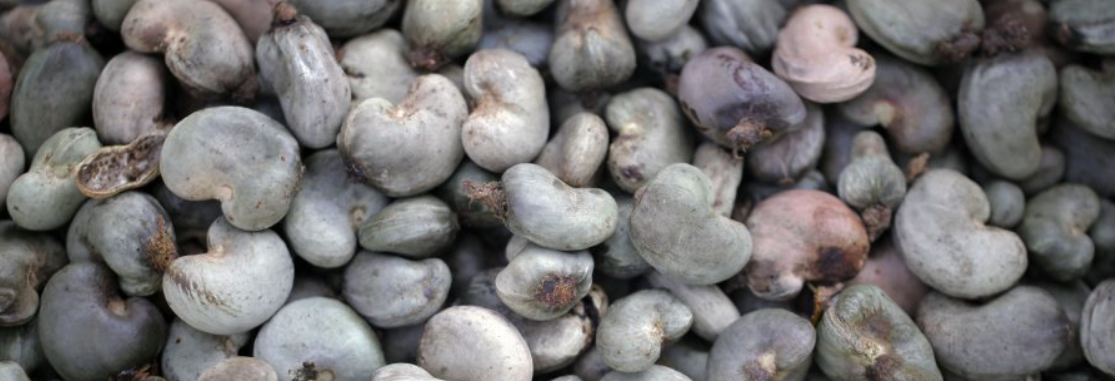
Raw Cashew Nut is one of the most commercially important agricultural export commodities in the global nuts and seeds trade. It is widely sourced by processors, importers, wholesalers, food manufacturers, ingredient suppliers, and industrial buyers who depend on stable access to quality nuts for shelling, grading, roasting, flavoring, packaging, and further conversion into finished consumer products. Although many people are familiar with packaged cashew kernels on supermarket shelves, serious commodity buyers know that the real trade conversation often starts much earlier, at the level of Raw Cashew Nut.
In practical trade terms, Raw Cashew Nut is not the same thing as ready-to-eat cashew kernels. It is the in-shell nut harvested from the cashew tree and traded as an industrial and agro-processing raw material. The buyer is not usually purchasing it for direct retail consumption. The buyer is purchasing it for controlled processing, kernel recovery, export manufacturing, or value-added commercial conversion. This distinction matters because the quality parameters for Raw Cashew Nut are different from the quality parameters used for processed cashew kernels.
Across Africa, Asia, Europe, the Middle East, and North America, Raw Cashew Nut continues to attract strong commercial attention because it connects farm production with high-value downstream processing. The commodity is especially important in countries where cashew cultivation is well established and where exporters, processors, and international traders work with large seasonal volumes. In many export circles, Raw Cashew Nut is evaluated not only by appearance, but by outturn, moisture, nut count, crop quality, storage condition, and origin performance.
In Nigeria and other West African markets, Raw Cashew Nut is already a familiar export commodity. It is often referenced in trade discussions simply as RCN, especially among exporters, buyers, warehouse operators, and processors. That market language is useful because it reflects how the commodity is actually discussed in commercial practice. A buyer may ask for Raw Cashew Nut, RCN, in-shell cashew, or export-grade cashew nut depending on the market, but the commercial expectations remain similar. The buyer wants good recoverable kernel potential, acceptable moisture, reasonable nut count, and a shipment that can process efficiently after arrival.
This commodity is particularly attractive because it sits at the front end of a high-value chain. Once processed properly, Raw Cashew Nut can produce kernels for roasting, salting, seasoning, private-label packaging, confectionery manufacturing, dairy-alternative products, nut pastes, ingredient blends, and foodservice supply. It can also generate shells and shell liquid that have commercial value in industrial and energy-related applications. That wide value chain is one reason the raw nut remains so important in international agricultural trade.
Still, profitable sourcing of Raw Cashew Nut is not as simple as finding a supplier with stock and agreeing on a price. Serious buyers need to understand outturn expectations, post-harvest handling, drying quality, infestation risk, loading discipline, traceability, and documentation. A shipment that looks acceptable externally may still deliver poor kernel recovery if the nuts were improperly dried, stored too long, mixed carelessly, or exposed to moisture. In cashew trade, mistakes made at the raw nut stage often become very expensive later in the processing line.
For importers and processors, the real cost of a Raw Cashew Nut shipment is therefore not limited to the quoted price per metric ton. The buyer must also think about recoverable kernel output, shelling efficiency, freight cost, process losses, storage stability, inspection cost, and financial exposure. A cheaper shipment with poor outturn can be less profitable than a higher-priced lot that processes cleanly and consistently. That is why experienced cashew buyers focus on value, not just on headline price.
Another important point is that Raw Cashew Nut is a commodity strongly influenced by harvest season, local collection systems, warehouse behavior, and international demand from major processing countries. Seasonal timing matters. Fresh crop, old crop, mixed-lot stock, and delayed-port stock can behave differently in quality terms. Buyers that understand the timing and structure of the supply chain usually make better commercial decisions than those who buy only from a simple offer sheet.
This guide looks at Raw Cashew Nut from a practical, buyer-focused, and trade-aware perspective. We will cover what it is, how it is made and processed, what it is used for, the health-related relevance associated with cashew products, possible side effects and sourcing risks, top producing and importing countries, how to source it safely, where to find reliable exporters, international price ranges per metric ton, payment methods, shipping terms, typical trade specifications, and the documents buyers should expect during shipment. The purpose is to help importers, processors, and serious trade buyers understand how to source Raw Cashew Nut with clearer judgment and lower operational risk.
Trade Overview of Raw Cashew Nut
| Product Name | Raw Cashew Nut |
|---|---|
| Botanical Name | Anacardium occidentale |
| Common Names | Raw Cashew Nut, RCN, In-Shell Cashew Nut, Export Cashew Nut |
| Nigerian/Common Market Reference | Often referenced in Nigerian export and processing trade as Raw Cashew Nut or RCN |
| Commodity Type | Nut Crop / Industrial Agro-Processing Raw Material |
| Common Commercial Forms | Raw in-shell cashew nut, dried export-grade raw cashew nut, warehouse-stored RCN, origin-graded RCN |
| Primary Uses | Kernel processing, roasting, packaging, confectionery ingredients, nut butter production, industrial shell by-product use |
| Typical Buyers | Cashew processors, importers, bulk traders, agro-processors, food manufacturers, ingredient suppliers, private-label packers |
| Typical Packaging | Jute bags, PP bags, export sacks, bulk containerized bagged shipment |
| Trade Concern Areas | Outturn, moisture, nut count, old crop mixing, mold risk, infestation, weak drying, poor storage, false specification claims |
| Shipment Mode | Mainly sea freight in containerized export shipments; air freight is rare and typically limited to small samples |
Commercially, Raw Cashew Nut is one of the few agricultural commodities where processing yield matters as much as physical appearance. A lot can look clean and still be commercially weak if the outturn is poor. This is why the trade relies heavily on technical buying language such as nut count, moisture, and kernel recovery expectations. Buyers that are new to cashew trade sometimes focus too much on visible quality and not enough on processing value. Experienced buyers do the opposite. They want the underlying numbers to make sense.
Raw Cashew Nut is also highly seasonal in many producing countries. That affects availability, warehouse age, shipment urgency, and price movement. At the beginning of a fresh crop cycle, buyers may see different risk profiles than they would later in the season when stocks have been sitting longer in storage or changing hands through multiple traders. This is another reason safe sourcing matters so much.
A proper commercial offer for Raw Cashew Nut should not stop at quantity and price. It should state origin, crop season, estimated outturn or recovery basis where available, nut count, moisture level, packaging method, quantity, inspection basis, and shipment terms. If the seller cannot clearly present these details, the offer is incomplete from a buyer’s point of view.
Request a Quote or Speak With Our Team About Raw Cashew Nut
Ready to source Raw Cashew Nut with confidence? Submit your RFQ for detailed specifications and formal quotations, or chat on WhatsApp for fast responses and quick clarification.
What Is Raw Cashew Nut?
Raw Cashew Nut is the in-shell seed of the cashew tree, Anacardium occidentale. It is harvested together with the cashew apple, but in commodity trade, the main concern is the nut itself. After harvesting, the nut is detached, dried, cleaned to a suitable standard, packed, and traded for processing. It is not sold as a direct retail snacking product in raw shell form for normal commercial food use. Instead, it is purchased by processors who shell and prepare the inner kernel for onward sale.
The outer shell of Raw Cashew Nut contains a corrosive and commercially significant liquid known as cashew nut shell liquid. Because of this, the raw nut is a processing commodity and not a simple consumer nut product. Specialized handling is required during shelling and industrial conversion. That is one reason buyers in the RCN market are usually processors, factory operators, or export traders linked to processing destinations.
Cashew-producing countries often export the raw nut to countries with large-scale shelling and kernel grading capacity. In this sense, Raw Cashew Nut functions as a bridge commodity between agricultural production and food manufacturing. It is a classic example of a commodity whose value multiplies after processing. The raw nut is important, but the economic value ultimately depends on what percentage of good kernels can be recovered from it and at what processing cost.
From a practical buying standpoint, Raw Cashew Nut is usually described by a combination of origin, crop year or crop season, moisture level, nut count per kilogram or per pound, and outturn basis. The exact technical language used can vary slightly by origin and buyer preference, but the goal is the same: to estimate how profitable the lot will be after processing.
It is also important to understand that Raw Cashew Nut quality depends greatly on post-harvest handling. Nuts that are harvested and dried properly tend to store and process better. Nuts that are exposed to rain, dried badly, or stored carelessly may lose commercial value. This means that the commodity is not judged only at the farm level. It is judged across the full chain from harvest to warehouse to port.
For Nigerian and West African market references, Raw Cashew Nut is a familiar export commodity and often a source of foreign exchange interest because of strong international demand. Buyers looking at Nigeria, Benin, Ghana, Côte d’Ivoire, and neighboring markets usually evaluate the raw nut as part of the wider West African cashew trade system, which remains a major supplier base to global processors.
How Raw Cashew Nut Is Made / Processed
Although the term Raw Cashew Nut refers to the unprocessed in-shell nut, the commercial quality of that raw material depends on a chain of cultivation, harvesting, drying, sorting, and storage steps. Buyers who understand this chain are usually better equipped to judge whether a shipment is likely to process well after arrival.
1. Cultivation and orchard management
Cashew trees are cultivated in tropical regions where temperature, rainfall pattern, and soil conditions support healthy nut formation. Orchard management influences final nut size, shell development, disease exposure, and harvest quality. Good farm practices do not guarantee perfect export stock on their own, but they do create a better starting point for later quality preservation.
2. Nut development and harvest season
The nut develops attached to the bottom of the cashew apple. When mature, the nut and apple are collected, usually during the seasonal harvest period. Timing matters because overripe, underdried, or weather-damaged nuts can reduce the commercial quality of the lot. Buyers often pay close attention to harvest timing in relation to shipment date because fresh crop and aged stock may behave differently.
3. Separation from the cashew apple
After harvest, the nut is separated from the apple. The apple may be used locally for juice, alcohol, or other products, but the raw nut moves into the main export chain. At this stage, basic hygiene and handling matter because the nuts still need to be dried and stabilized properly for storage and shipment.
4. Drying and moisture stabilization
Drying is one of the most important steps in the Raw Cashew Nut chain. The nuts must be dried to a safe moisture level that supports storage and reduces mold or deterioration risk. Poor drying is a major cause of commercial loss in cashew trade. Even if a lot looks externally fine, excess moisture can reduce shelf stability, weaken kernel quality, and create processing trouble later.
5. Cleaning and removal of debris
After drying, the nuts may be cleaned to remove leaves, twigs, stones, dust, and other foreign material. The extent of cleaning depends on the supplier’s standards and the buyer’s expectations. While Raw Cashew Nut is not usually expected to look like a polished consumer product, it should still be commercially sound and free from excessive extraneous material.
6. Grading and lot assembly
Suppliers often assemble export lots from multiple collection points, warehouses, or farm networks. This is where lot management becomes very important. A well-managed exporter will group stock more carefully by season, physical condition, moisture, and approximate performance. A careless exporter may blend variable stock together, creating inconsistency in outturn and nut count. For buyers, that inconsistency is a major risk.
7. Bagging and warehouse storage
Once ready, Raw Cashew Nut is packed into export bags and stored pending shipment. Warehouse discipline matters significantly in this commodity. Even well-dried nuts can lose value if stored in damp, badly ventilated, or pest-affected environments. Good warehousing means dry conditions, reasonable stacking, separation from direct floor moisture, odor control, and protection from infestation.
8. Pre-shipment inspection and testing
For serious export transactions, buyers or their agents often inspect the cargo before shipment. This may include checking weight, moisture, bag condition, and sample performance. Some buyers also rely on agreed outturn testing or cutting tests to estimate kernel recovery. This stage is crucial because it helps connect the contract to the actual lot being shipped.
9. Downstream shelling and kernel processing
After import, Raw Cashew Nut is usually steamed, roasted, or otherwise prepared for shelling depending on the processing system. The shell is removed, the kernels are dried further, peeled, graded, and packed. The buyer’s profit on the raw nut depends heavily on how efficiently this downstream process works. That is why the quality of the raw nut at origin is so important. The raw stage determines much of the processing outcome.
What Is Raw Cashew Nut Used For?
Raw Cashew Nut is used primarily as a processing raw material. Unlike many nuts that can be sold directly to consumers after simple handling, RCN generally moves into industrial or semi-industrial transformation first. Its uses therefore reflect its role as an upstream commodity in a larger value chain.
Kernel production for food markets
The main use of Raw Cashew Nut is the recovery of cashew kernels. These kernels are graded and sold into retail packs, hotels, airlines, bakeries, confectionery plants, supermarkets, and foodservice channels. This is the central commercial purpose of most RCN shipments. Buyers in this segment care deeply about recoverable whole kernels, broken ratio, and overall shelling performance.
Roasted and flavored snack production
Once kernels are extracted, they may be roasted, salted, seasoned, honey-coated, or packaged in premium snack formats. That downstream market gives Raw Cashew Nut a strong commercial pull because consumer demand for cashew snacks remains robust in many countries. The better the raw nut processes, the stronger the downstream profitability can be.
Confectionery and bakery ingredients
Cashew kernels recovered from Raw Cashew Nut are used in chocolates, energy bars, pastries, desserts, granolas, cereals, and specialty bakery formulations. This broadens the commercial value chain and supports demand from ingredient companies, not just snack processors.
Nut butter and paste manufacturing
Cashew kernels are also used in nut butter production, spreads, sauces, dairy-alternative products, and plant-based ingredient formulations. The rise of plant-based foods has made this use more commercially relevant in recent years. Although the buyer in that sector purchases kernels rather than raw nuts directly in many cases, the chain still begins with the quality of the Raw Cashew Nut.
Industrial use of shells and shell liquid
The shell portion of Raw Cashew Nut is not simply waste. Cashew nut shell liquid and shell-derived materials are used in certain industrial applications, including resins, friction materials, coatings, and energy-related uses in some contexts. This means the raw nut has multiple value streams beyond the edible kernel alone.
Private-label and branded packaged foods
The kernels produced from Raw Cashew Nut also feed into private-label grocery and health-food brands. Many of these brands never buy RCN directly, but the integrity of their supply chain still depends on the performance of the raw nut sourced by processors. That is one reason processors care so much about repeatable raw material quality.
Health Benefits of Raw Cashew Nut
When discussing health benefits in relation to Raw Cashew Nut, it is important to be clear that the raw in-shell nut is a processing commodity. The health value consumers recognize comes mainly from the edible cashew kernel after proper processing. Still, buyers in food and ingredient markets often care about the nutritional reputation of cashew products because that reputation helps support demand.
1. Linked to nutrient-rich kernel demand
Cashew kernels are widely regarded as nutrient-dense foods in many consumer markets. This supports steady commercial demand for the raw nuts from which they are produced. Buyers of Raw Cashew Nut are therefore not just trading a farm product. They are trading the starting point of a nutritionally valued finished food category.
2. Supports plant-based protein positioning
Cashew products are often associated with plant-based eating patterns and are used in snack products, plant-forward recipes, and dairy-alternative formulations. This gives Raw Cashew Nut indirect relevance in the broader plant-based food market. The stronger that consumer demand becomes, the more important reliable raw nut sourcing becomes for processors.
3. Associated with healthy fat consumer interest
Cashew kernels are commonly valued in the market because consumers view them as a source of beneficial fats within balanced diets. This perception supports premium retail positioning and helps processors market finished cashew products more effectively. For RCN buyers, it is one of the reasons long-term demand remains attractive.
4. Relevant to mineral-rich food categories
Cashew-based foods are often marketed in connection with mineral content and everyday nutritional appeal. Again, this benefit is realized after processing, but it still matters commercially at the raw stage because it supports demand for the final product. A commodity with strong consumer acceptance downstream is easier to trade upstream.
5. Useful in premium snack and wellness channels
Cashew kernels derived from Raw Cashew Nut often enter premium snack categories, fitness-oriented foods, and wellness-focused packaged goods. That commercial destination helps maintain demand for higher-performing raw nuts with better recovery potential.
6. Strong consumer familiarity improves trade movement
One practical advantage in cashew trade is that consumers already know and trust cashew products in many markets. This means processors and importers are not trying to build a market from zero. They are supplying an already familiar product, which can support steady turnover and repeat purchase patterns.
Side Effects of Raw Cashew Nut
Raw Cashew Nut requires careful treatment in both commercial and food-safety terms. The “side effects” discussion here covers not just consumer considerations, but also handling and sourcing risks that matter to buyers and processors. Serious trade requires a realistic understanding of these issues.
1. Raw shell handling requires caution
The shell of Raw Cashew Nut contains caustic substances that can irritate the skin and create handling hazards during processing. This is one reason the raw nut is not a simple ready-to-eat commodity. Processors must use proper methods and equipment when shelling and handling the nuts industrially.
2. Poor drying can lead to mold and quality loss
One of the biggest risks in RCN trade is poor post-harvest drying. Excess moisture can encourage spoilage, odor issues, and deterioration that affect kernel quality and commercial value. This is not only a processing concern. It is also a trade-risk issue because a wet lot can trigger claims and reduce profitability sharply.
3. Old crop or poorly stored stock may process badly
Raw Cashew Nut that has been stored too long or under weak warehouse conditions may lose value through reduced kernel recovery, infestation risk, or internal quality decline. Some lots may appear normal externally while processing poorly later. Buyers that ignore storage history take unnecessary risk.
4. Allergic sensitivity exists for cashew products
As with many tree nuts, cashew products may trigger allergic reactions in some consumers. This is not unique to cashews, but it is commercially relevant for processors and downstream brands. While the raw nut buyer is not usually selling directly to consumers, product traceability and accurate supply descriptions still matter in the wider chain.
5. Misstated outturn can create major financial loss
Another critical commercial side effect is poor supplier accuracy. If a lot is sold with exaggerated outturn expectations, the buyer may suffer major losses after processing. This is why pre-shipment verification and clear contract language are so important in the RCN market.
6. Infestation and contamination remain real risks
Because Raw Cashew Nut moves through agricultural collection and warehousing systems, infestation and contamination risks are real. A shipment can arrive with hidden insect issues, weak bagging, or contamination from poor storage. Serious buyers therefore evaluate not only price, but also warehouse discipline and shipment preparation.
Top Producing & Exporting Countries of Raw Cashew Nut
Raw Cashew Nut is produced in several tropical regions, but some countries stand out because of their scale, export role, or influence in the international cashew trade. Knowing the main producing and exporting countries helps buyers make better sense of supply patterns and origin differences.
1. Côte d’Ivoire
Côte d’Ivoire is widely recognized as one of the leading producers and exporters of Raw Cashew Nut. Its large production base makes it a major reference point in global cashew trade. Buyers often watch Ivorian crop conditions and export activity closely because these can influence broader market sentiment and pricing.
2. Nigeria
Nigeria is an important player in the RCN trade because of its significant production base and strong export interest. It also holds particular importance for buyers sourcing from West Africa due to its large agricultural network, port options, and role in regional cashew supply discussions.
3. Benin Republic
Benin is a notable cashew origin in West Africa and remains relevant in cross-border and export trade. Buyers frequently encounter Benin-origin offers in the international market, especially in relation to seasonal West African supply programs.
4. Ghana
Ghana is another important cashew-producing country with growing relevance in agricultural exports and agro-processing conversations. For some buyers, Ghana offers a useful alternative origin within the same broad regional supply environment.
5. Tanzania
Tanzania is a major East African cashew producer and has long been associated with Raw Cashew Nut trade. East African origins sometimes differ from West African origins in timing, logistics, and certain commercial preferences, so buyers often compare them carefully.
6. Guinea-Bissau and other regional suppliers
Guinea-Bissau and several other producing countries also matter in the RCN trade, especially during active export seasons. Even where shipment volumes are smaller than the largest producers, these origins can still be commercially significant for traders seeking supply diversity.
Top Importing Countries of Raw Cashew Nut
The main import demand for Raw Cashew Nut comes from countries with strong shelling and processing capacity. These buyers do not import the raw nut for simple resale. They import it because they have factories and processing systems that convert the commodity into higher-value kernel products.
1. Vietnam
Vietnam is one of the most important countries in the global Raw Cashew Nut trade because of its massive shelling and kernel processing industry. It has long been a central destination for RCN shipments from Africa and other producing regions. Any major movement in Vietnamese buying activity can affect international market pricing quickly.
2. India
India remains a critical importing and processing market for Raw Cashew Nut. Its processing sector has deep historical roots in the cashew industry, and its demand continues to influence global trade patterns. Many origin exporters watch Indian demand very closely during the season.
3. United Arab Emirates
The UAE may also be relevant as a trade hub and redistribution center in some cashew flows. While it is not the same kind of industrial processing center as Vietnam or India, it can still matter in certain trading structures and re-export arrangements.
4. China
China is significant in the broader nut and ingredient trade and may play an important role in demand for processed cashew products as well as in certain raw and semi-processed flows. Its influence is often felt more broadly across the cashew value chain.
5. European processing-linked buyers
Some European buyers are more active in the kernel segment than in RCN itself, but certain industrial and trading structures still make Europe relevant to the broader import conversation. For exporters, it is useful to understand where direct RCN demand ends and kernel demand begins.
6. Other regional processing markets
Beyond the dominant names, other countries with developing agro-processing capacity may also import Raw Cashew Nut or related cashew raw materials in smaller volumes. These markets can become relevant for exporters looking to diversify beyond the main traditional destinations.
How To Safely Source for Your Raw Cashew Nut Produce
Safe sourcing is the heart of successful Raw Cashew Nut trade. A buyer can agree on a competitive price and still lose money if the lot is badly dried, old, infested, falsely described, or weak in recoverable kernels. The first rule is to define your buying purpose clearly. Are you buying for industrial shelling, toll processing, resale to a processor, or supply into a long-term production program? Your intended use determines how strict your sourcing and inspection process needs to be.
The next step is supplier verification. In the RCN market, many offers circulate through intermediaries who do not actually control stock. Before discussing large payments, the buyer should know whether the seller is a farmer group, warehouse operator, exporter, consolidator, or broker. None of these roles is automatically unsuitable, but the question of control is critical. Where is the stock physically stored? Can the seller provide warehouse evidence? Can an inspection be arranged? Has the seller exported before? Can the seller support standard documents without confusion?
Specification is essential. A serious Raw Cashew Nut contract should cover origin, crop season, moisture basis, nut count, packaging, shipment tolerance, and the testing or inspection method to be used. If outturn is part of the deal, then the basis of determining outturn should be discussed carefully. Buyers that work with vague language often create the conditions for later disputes.
Moisture control deserves very close attention. Cashew is not a commodity where moisture can be guessed casually. Poor drying damages storage stability and can reduce processing value. Buyers should request moisture data and, where possible, verify it independently. A wet shipment can be disastrous by the time it reaches the factory, even if the price looked attractive at origin.
Warehouse condition is another major factor. Ask how long the stock has been stored, what type of warehouse is used, how the bags are stacked, whether the floor is dry, and whether pest control is active. RCN stored in hot, damp, or poorly managed warehouses can deteriorate in ways that are not obvious from a simple photo. This is one reason inspection before shipment is so valuable.
Sampling must be handled carefully. A polished sample does not automatically represent the full lot. Buyers should make sure that the lot actually shipped is tied to the sampled stock or to a recognized inspection process. In larger deals, using an independent surveyor or inspection agency is often worth the cost because the financial risk of a bad lot can be much higher.
Another critical issue is old-crop mixing. Some suppliers may blend older stock with newer stock to improve appearance or move aging inventory. This can undermine processing performance. Buyers should ask direct questions about crop season and storage time, and should compare the answers against inspection observations where possible.
Packaging should also be reviewed carefully. Strong bags, sensible marking, and good container stuffing practice reduce loss and contamination risk. Cashew shipments often move in bagged container loads, so weak bagging can result in torn cargo, weight disputes, or avoidable contamination during handling.
Loading discipline matters just as much as warehouse discipline. The container should be clean, dry, and suitable for agricultural cargo. The exporter should supervise stuffing properly, ensuring that the cargo is arranged sensibly and that obvious moisture or odor risks are avoided. A bad container can damage a good lot.
Payment structure should reflect supplier credibility. For first deals, many buyers avoid full prepayment unless the seller is strongly verified and the exposure is acceptable. Part payment, balance against documents, or bank-supported trade structures are often safer. The exact structure depends on commercial context, but the core principle is simple: financial exposure should not exceed the quality of your commercial visibility.
Destination requirements should also be checked before shipment. This includes customs documents, phytosanitary expectations, certificate of origin needs, fumigation or treatment requirements where applicable, and any processor-specific intake conditions. Buyers that understand both origin and destination requirements are better positioned to avoid port and factory problems later.
Finally, build long-term supply relationships rather than chasing only opportunistic spot deals. The most valuable suppliers in the RCN market are those who communicate honestly, maintain quality discipline, and support repeatable shipment execution. In a commodity where technical performance matters so much, repeatability is often more valuable than a one-time low price.
Where To Find Reliable Exporters for Raw Cashew Nut
Reliable exporters of Raw Cashew Nut are usually found through origin-market networks, established cashew trade relationships, warehouse-linked exporters, processing-industry referrals, agricultural trade exhibitions, and carefully screened B2B introductions. The challenge is that the cashew trade attracts many intermediaries, and not all of them have real cargo control.
One of the best signals of exporter reliability is operational clarity. A reliable exporter can explain where the stock is stored, how it was sourced, what the crop timing is, what moisture and nut count position is being claimed, how the bags are packed, what documents are available, and how loading will be handled. Exporters who remain vague at this level often create problems later.
Another good approach is to start with a manageable trial order where practical. A smaller shipment allows the buyer to assess not only product quality, but also the supplier’s documentation discipline, honesty under pressure, response speed, and shipment execution. In cashew trade, a supplier’s behavior during a real transaction reveals more than marketing language ever can.
Buyers should also pay attention to whether the exporter understands processor priorities. Suppliers who know cashew trade well will naturally talk about moisture, nut count, outturn expectations, crop freshness, and warehouse condition. Those who only talk about quantity and price may not understand the commodity deeply enough to support a reliable deal.
For high-volume or recurring procurement, it is especially important to work with exporters who can maintain consistency across shipments rather than merely offering one strong lot. The best exporters reduce risk through clear communication, stock control, basic transparency, and familiarity with export documentation. In Raw Cashew Nut trade, reliability is as valuable as price.
International Price of Raw Cashew Nut Per Metric Ton
The international price of Raw Cashew Nut depends on origin, season, crop quality, global processor demand, outturn expectations, nut count, moisture, shipment timing, and freight conditions. Unlike some simpler bulk commodities, RCN prices are closely tied to expected processing value. This means two lots from the same country can trade at meaningfully different prices if their technical performance differs.
As a practical guide for 2025 to 2026 commercial discussions, Raw Cashew Nut may commonly trade within a broad range of about US$950 to US$1,650 per metric ton depending on origin, season, outturn profile, and shipment basis. Lower-end prices are more likely to be seen in weaker crop conditions, lower-performing stock, distressed selling situations, or less competitive origin positions. Higher-end prices are more likely for stronger fresh-crop lots, better outturn expectations, tighter supply, or periods of active processor demand.
In many real transactions, workable market pricing tends to cluster somewhere around the middle of the range rather than at the extremes. However, the meaningful question is not simply the purchase rate per ton. It is the effective cost of recovered kernels after processing, including freight, losses, shelling efficiency, and finance cost. That is why experienced buyers often compare lots on performance-adjusted value, not merely on FOB price alone.
Buyers should also remember that RCN price movement can be influenced strongly by the purchasing activity of major processing countries, especially when factories are actively replenishing stock. Seasonal farmgate dynamics in origin countries, exchange rate changes, and port-side congestion can also affect commercial offers. For that reason, it is wise to compare several offers and evaluate them in the context of actual processing value rather than price headlines alone.
Request a Quote or Speak With Our Team About Raw Cashew Nut
Ready to source Raw Cashew Nut with confidence? Submit your RFQ for detailed specifications and formal quotations, or chat on WhatsApp for fast responses and quick clarification.
How To Pay For Your Raw Cashew Nut Produce
Payment structure in Raw Cashew Nut trade should be handled with care because the commodity is technical, seasonal, and often traded in large values. The correct method depends on the order size, the supplier relationship, the bank environment, and the buyer’s level of confidence in the cargo and documentation.
Advance payment for small and established transactions
Advance payment may be used for smaller orders, sample lots, or repeat dealings with suppliers that have already proven reliable. It can speed execution, but it is rarely the best option for a first large transaction with an unverified counterparty. In RCN trade, full prepayment without visibility is often a preventable risk.
Deposit with balance against shipping documents
Many buyers prefer a staged structure in which a deposit secures the cargo and the balance is paid against agreed shipping documents. This can help both parties move forward while still preserving a measure of control. The key is to define exactly which documents trigger final payment and what happens if the agreed conditions are not met.
Letter of credit for larger structured business
For larger transactions, a letter of credit can offer stronger formal protection by tying payment to documentary performance. This may suit corporate buyers and sellers who want clearer banking structure. However, LC terms must be drafted carefully, particularly in agricultural trade where avoidable document discrepancies can cause expensive delays.
Documentary collection in selected relationships
In some trade environments, documentary collection can be used where trust exists but a full letter of credit is not necessary. Suitability depends on the legal, banking, and commercial setting. It is not automatically safer than all other methods, but it can work in the right context.
Match financial exposure to commercial visibility
The most important rule is to match payment comfort to commercial evidence. A verified warehouse, a trusted exporter, a clear specification, and an agreed inspection process justify more confidence than a vague offer from an unknown intermediary. Good buyers build trust progressively rather than risking large capital on assumptions.
Shipping & Delivery Terms
Shipping terms in Raw Cashew Nut trade should be defined clearly before contract execution. Because RCN is usually moved in containerized form and often in substantial values, confusion about freight, insurance, loading, and destination obligations can become costly very quickly.
FOB terms for buyers controlling freight
Under FOB terms, the seller is generally responsible until the cargo is loaded on board at the named port, while the buyer controls main ocean freight. This suits buyers that already have freight relationships and want more direct control over vessel booking and downstream shipping management.
CIF terms for simpler landed cost planning
Under CIF terms, the seller arranges freight and insurance to the destination port. Some buyers prefer this where origin logistics are complex or where they want a more straightforward landed-cost discussion. Even so, buyers should review the freight assumption carefully rather than treating all CIF offers as equal.
Container condition must be checked carefully
RCN should be loaded into containers that are dry, clean, odor-free, and structurally sound. Containers with dampness, chemical odor, holes, or weak floors can damage the cargo or create claims. Good exporters inspect containers carefully before stuffing begins.
Bagging and stacking influence cargo safety
Since Raw Cashew Nut is usually shipped in bags, stacking discipline matters. Proper arrangement helps reduce shifting, tearing, and pressure damage during transit. Good bag quality also reduces loss and contamination risk during port handling and unloading.
Arrival planning is part of safe trade execution
Buyers should plan customs clearance, warehouse intake, and factory delivery before the vessel sails. Delays at destination can create demurrage and operational stress, especially if the cargo is needed for active processing schedules. Smooth shipping is not just about loading. It is about the full chain from origin warehouse to destination factory gate.
Our Typical Trade Specifications For Raw Cashew Nut
| Parameter | Typical Export Specification |
|---|---|
| Product | Raw Cashew Nut |
| Botanical Name | Anacardium occidentale |
| Form | Whole raw in-shell cashew nut |
| Grade | Export processing grade |
| Moisture | Typically around 8% to 10% maximum, subject to contract and origin practice |
| Nut Count | As agreed in contract, often expressed per kilogram or per pound depending on trade practice |
| Outturn | Subject to buyer testing, contract basis, and origin season |
| Foreign Matter | Low and within agreed tolerance |
| Condition | Sound, dry, clean, free from live infestation at shipment |
| Crop Status | Fresh crop or specified crop season, subject to contract |
| Packaging | Typically 80kg bags or other agreed export bag format, depending on market practice |
| Marking | Standard export marking or buyer-specific instructions |
| Inspection | Buyer option or independent pre-shipment inspection as agreed |
| Storage | Stored in dry, ventilated, hygienic warehouse conditions prior to shipment |
These are only typical guide specifications. Real contracts should define the exact quality basis, especially where outturn, nut count, or crop condition are commercially significant. Because cashew profitability depends heavily on processing yield, even small differences in specification can matter a great deal financially.
Expected Shipping Documents
Documentation is a critical part of Raw Cashew Nut trade. A physically acceptable shipment can still become problematic if the paperwork is inconsistent, incomplete, or late. Buyers should confirm required documents well before loading so that the transaction flows smoothly.
Commercial invoice
The commercial invoice states the seller, buyer, product description, quantity, unit price, total value, and trade terms. It must match the contract and other shipment documents accurately. Inconsistent invoice details are a common cause of customs and payment problems.
Packing list
The packing list provides the breakdown of bags, net weight, gross weight, and packaging format. This supports customs clearance, cargo verification, and destination warehouse planning.
Bill of lading
The bill of lading is the core sea freight document confirming carriage of the goods. Buyers should ensure that consignee details, notify party details, cargo description, and shipment references are correct before document release.
Certificate of origin
Many buyers require a certificate of origin to confirm the source country of the Raw Cashew Nut. This can matter for customs treatment, tariff planning, and internal traceability.
Phytosanitary certificate
As an agricultural commodity, Raw Cashew Nut may require a phytosanitary certificate depending on destination-country rules. Buyers should verify whether this is necessary before shipment to avoid surprise clearance issues later.
Inspection certificate
Where pre-shipment inspection is part of the commercial arrangement, an inspection certificate from a recognized surveyor can help confirm quantity and basic conformity. In the cashew trade, this can be particularly useful because technical disputes can be expensive.
Quality certificate or moisture report
Some buyers request quality support documents such as a moisture report, basic quality certificate, or sample-based test summary. The exact content depends on the transaction, but clearer technical support generally improves trust in the shipment.
Fumigation or treatment record where applicable
Depending on destination requirements and cargo condition, a fumigation or treatment certificate may be required. This should be confirmed before shipment rather than assumed later.
Insurance certificate under CIF terms
Where the cargo is sold on CIF basis, the insurance certificate should be part of the document set. Buyers should confirm that the coverage is meaningful and consistent with the contract value and route.
Raw Cashew Nut remains one of the most commercially strategic commodities in the global nut trade because it connects origin agriculture with high-value processing, branded food products, and multiple industrial by-product streams. For buyers, it offers real opportunity, but it also demands discipline. This is not a commodity that should be purchased casually from vague offers or poorly verified suppliers.
The best outcomes in Raw Cashew Nut trade usually come from clear specification, honest supplier communication, careful moisture and outturn evaluation, proper warehouse control, strong loading discipline, and realistic payment structure. When these elements are managed well, the buyer is much better positioned to protect yield, control risk, and support profitable downstream processing.
Request a Quote or Speak With Our Team About Raw Cashew Nut
Ready to source Raw Cashew Nut with confidence? Submit your RFQ for detailed specifications and formal quotations, or chat on WhatsApp for fast responses and quick clarification.